Showing posts with label would. Show all posts

Why would a person have pink sweat (chromhidrosis)?

Pink sweat is typically due to chromhidrosis (colored sweat).

What is chromhidrosis?

Chromhidrosis is a rare condition characterized by the secretion of colored sweat. Approximately 10% of normal people have colored sweat (without chromhidrosis).

Two glands produce sweat:

- Eccrine glands secrete a clear, odorless fluid that regulates body temperature.

- Apocrine glands secrete a thick, milky sweat that, once broken down by bacteria, is the main cause of body odor (smell).

Which glands are responsible for chromhidrosis?

- Chromhidrosis is caused mainly by the apocrine glands. They are located in the genital, axillary, areolar, and facial skin. Chromhidrosis is reported only on the face, axillae, and breast areola.

- Eccrine chromhidrosis is rare and occurs with ingestion of certain dyes or drugs.

- Pseudochromhidrosis occurs when clear eccrine sweat becomes colored on the surface of the skin as a result of extrinsic dyes, paints, or chromogenic bacteria.

What is the pigment in chromhidrosis?

Lipofuscin is a yellowish brown pigment that is responsible for the colored sweat. Lipofuscin is produced in the apocrine glands, and its various oxidative states account for the characteristic yellow, green, blue, or black secretions in chromhidrosis.

Are any lab tests indicated?

No laboratory abnormalities are typically found in apocrine chromhidrosis. The following test may help to rule out other causes:

- complete blood cell count (CBC) to exclude bleeding diathesis
- urinary homogentisic acid levels to exclude alkaptonuria
- fungal and bacterial cultures to exclude infectious causes of pseudochromhidrosis

How to treat chromhidrosis?

Apocrine chromhidrosis has no cure. Patients can manually or pharmacologically empty the glands to remove the color for 48-72 hours (until the glands replenish the pigment).

Botox® injections have been attempted in chromhidrosis, with mixed results. Botox is predominantly used to decrease eccrine sweat in persons with hyperhidrosis.

Capsaicin cream (alkaloid found in chilly peppers) also can help.

References:

Chromhidrosis - Medscape http://bit.ly/UmhTXU
Facial and axillary apocrine chromhidrosis http://bit.ly/UmhV1Q
Treating Chromhidrosis - Discovery Health http://bit.ly/UmhVPE
Image source: Sweat, Shaylor's photostream, Creative Commons license. The image is not related and does not show a patient.

Comments from Twitter:

Laura VR Bertotto @LauraAtVMV: Botox has worked well for hyperhydrosis. This is interesting.

Dr. Claudia Aguirre @doctorclaudia: Interesting.
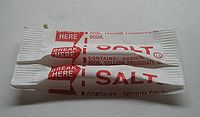
3-gram reduction in daily salt intake would decrease coronary heart disease, stroke, and death

The U.S. diet is high in salt, with the majority coming from processed foods. Reducing dietary salt is a potentially important target for the improvement of public health.

Reducing dietary salt by 3 g per day (1200 mg of sodium per day) is projected to reduce the annual number of new cases of CHD by 60,000 to 120,000, stroke by 32,000 to 66,000, and myocardial infarction by 54,000 to 99,000 and to reduce the annual number of deaths from any cause by 44,000 to 92,000. Such an intervention would be more cost-effective than using medications to lower blood pressure in all persons with hypertension.

The cardiovascular benefits of reduced salt intake are on par with the benefits of population-wide reductions in tobacco use, obesity, and cholesterol levels.

References:

Projected Effect of Dietary Salt Reductions on Future Cardiovascular Disease. NEJM, 2010.
http://content.nejm.org/cgi/content/short/362/7/590
Sweat Bees prefer sweaty people because the human diet is so salty that their perspiration is saturated with that essential nutrient. WSJ, 2012.
Image source: Single-serving salt packets. Wikipedia, GNU Free Documentation License.

A NYTimes skeptic doubts that decreasing salt intake would have any benefits (it may even hurt)


From the NYtimes:

"The harder the experts try to save Americans, the fatter we get. Officials responded by advising Americans to shun fat, which became the official villain of the national dietary guidelines during the 1980s and 1990s. The anti-fat campaign definitely made an impact on the marketing of food, but as we gobbled up all the new low-fat products, we kept getting fatter. Eventually, in 2000, the experts revised the dietary guidelines and conceded that their anti-fat advice may have contributed to diabetes and obesity by unintentionally encouraging Americans to eat more calories.

“When you reduce salt, you reduce blood pressure, but there can also be other adverse and unintended consequences. As more data have accumulated, it’s less and less supportive of the case for salt reduction, but the advocates seem more determined than ever to change policy.”

References:

Findings - When It Comes to Salt, No Rights or Wrongs. Yet. - NYTimes.com.
3-gram reduction in daily salt intake would decrease coronary heart disease, stroke, and death
Sweat Bees prefer sweaty people because the human diet is so salty that their perspiration is saturated with that essential nutrient. WSJ, 2012.
Image source: Single-serving salt packets. Wikipedia, GNU Free Documentation License.