Showing posts with label cardiovascular. Show all posts

94% of Americans score at “poor” level on at least one of the 7 factors defining ideal cardiovascular health

More than 90% of Americans score poorly on at least one of the American Heart Association’s 7 factors defining ideal cardiovascular health.

The 7 factors (with lack of a diagnosis of heart or blood vessel disease) include:

- smoking status
- weight
- physical activity
- healthy diet
- cholesterol concentration
- blood pressure
- fasting glucose concentration

The new data by CDC and NIH show that 94% of US adults score at a “poor” level on at least one of those factors and that 38% have at least 3 factors at a poor level.

References:

US citizens score poorly on ratings of cardiovascular risk factors. BMJ 2012; 344 doi: 10.1136/bmj.e22 (Published 4 January 2012).

Unfaithfulness in men may be associated with higher risk of
cardiovascular events

Unfaithfulness in men may be associated with higher risk of cardiovascular events

The authors of this study from Italy performed an extensive Medline search for “unfaithfulness,”“extramarital affairs,”“infidelity,” and “men.”

How common is unfaithfulness in men?

As expected the results were variable. Some surveys reported that 1.5–4% of married men had extramarital coitus in any given year, others that 23.2% of men have cheated during their current relationship.

Lifetime prevalence of unfaithfulness was between 15% and 50%.

What are the factors related to unfaithfulness?

Men with extramarital affairs more frequently have a dysfunctional primary relationship.

Parenthood and conflicts within the family are associated with a higher risk of having an affair.

Unfaithful men display a higher androgenization, larger testis volume, higher sexual desire, and better sexual functioning.

What are the clinical implications of unfaithfulness in men?

Some studies have suggested that having an extramarital affair could have a negative impact on cardiac morbidity and mortality. Unfaithfulness in men seems to be associated with a higher risk of major cardiovascular events.

References

Fisher AD, Bandini E, Rastrelli G, Corona G, Monami M, Mannucci E, and Maggi M. Sexual and cardiovascular correlates of male unfaithfulness. J Sex Med, 2012.

Image source: OpenClipart.org, public domain.

Erectile dysfunction is a strong predictor of death in men with cardiovascular disease

From CNN:

Men with cardiovascular disease and ED were twice as likely to die from all causes than men who did not have erectile dysfunction. And those with ED were 1.6 times more likely to suffer from a serious cardiovascular problem such as a heart attack or stroke.

Erectile dysfunction is something that regularly should be addressed in the medical history of patients; it might be a symptom of early atherosclerosis.

Men with ED who are going to a general practitioner or a urologist need to be referred for a cardiology workup to determine existing cardiovascular disease and proper treatment. ED is an early predictor of cardiovascular disease.

References:
Study: Erectile dysfunction may indicate heart disease, death risk - CNN.com.
ED, Depression, Heart Disease: Does the Existence of One Component of This Triad Necessitate Inquiring the Other Two? http://goo.gl/EKvKl
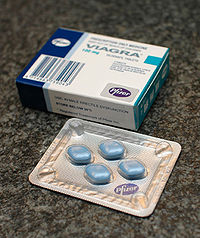
Image source: Viagra (sildenafil), Wikipedia, GNU Free Documentation License.
No NSAID may be safe in cardiovascular terms - naproxen seems least
harmful

No NSAID may be safe in cardiovascular terms - naproxen seems least harmful

This BMJ meta-analysis included large scale randomised controlled trials comparing any non-steroidal anti-inflammatory drug (NSAID) with other non-steroidal anti-inflammatory drugs or placebo. Data synthesis included 31 trials in 116, 429 patients. Patients were allocated to naproxen, ibuprofen, diclofenac, celecoxib, etoricoxib, rofecoxib, lumiracoxib, or placebo.

Study outcomes

The primary outcome was myocardial infarction. Secondary outcomes included stroke, death from cardiovascular disease, and death from any cause.

Cardiovascular risks

Compared with placebo, rofecoxib (Vioxx) was associated with the highest risk of myocardial infarction (rate ratio 2.12), followed by lumiracoxib (2.00).

Ibuprofen was associated with the highest risk of stroke (3.36), followed by diclofenac (2.86).

Etoricoxib (4.07) and diclofenac (3.98) were associated with the highest risk of cardiovascular death.

Little evidence exists to suggest that any of the investigated drugs are safe in cardiovascular terms. Naproxen (Aleve, Naprosyn) seemed least harmful.

According to the corresponding BMJ editorial, Celebrex (celecoxib) is not much safer either: "All cyclo-oxygenase-2 inhibitors studied in large placebo controlled trials have been found to confer an increased risk of serious cardiovascular disease. This suggests that patients with a high risk of cardiovascular disease should avoid cyclo-oxygenase-2 inhibitors (COX-2). "

References

Cardiovascular safety of non-steroidal anti-inflammatory drugs: network meta-analysis. BMJ 2011; 342:c7086 doi: 10.1136/bmj.c7086 (Published 11 January 2011)

Editorial: Cardiovascular safety of NSAIDs. Wayne A Ray. BMJ 342:doi:10.1136/bmj.c6618 (Published 11 January 2011)

Image source: Wikipedia, public domain.