
Lesson by Rose Eveleth, animation by TED-Ed. "Would you rather be bitten by a venomous rattlesnake or touch a poisonous dart frog? While both of these animals are capable of doing some serious damage to the human body, they deliver their dangerous toxins in different ways. Rose Eveleth sheds light on the distinction between poison and venom (and why you shouldn't treat either one like you've seen in the movies)."
Showing posts with label what#039;s. Show all posts
Showing posts with label what#039;s. Show all posts
Protein Bars: What's In It?
Protein Bars | What's In It | The New York Times. Protein bars offer convenience, but they can also contain as much sugar as a candy bar and the calorie count of an entire meal.
Read the story here: http://nyti.ms/1nqbEQv
Read the story here: http://nyti.ms/1nqbEQv
How to Subscribe to "What's New" Specialty Page of UpToDate? No Feed, No Problem for Google Reader
 35% of UpToDate topics are updated every four months. The editors select a small number of the most important updates and share them via "What's new" page. These selections are changed with each major release of UpToDate, in March, July and November. See these updates by clicking on the specialty you are interested in.
The page does not provide RSS feed for the different specialties. One solution is to copy/paste the URL address of each subspecialty page you are interested in the Google Reader "Add a subscription" field (top left corner). Google Reader will automatically create a RSS feed from this "feedless" page.
References:
UTD Contents: What's New

What's new in infectious diseases from UpToDate
- Brain MRI may be useful in patients with endocarditis. In one study including 53 patients, early use of cerebral MRI led to the reclassification from possible to definite IE in 30% of cases.
- Cotrimoxazole prophylaxis was associated with a 50 percent reduction in deaths in patients starting antiretroviral therapy with CD4 counts lower than 200 cells.
- Universal influenza immunization: In 2010, the CDC expanded the recommendation for influenza vaccination to include all individuals 6 months of age and older. Previous guidelines recommended influenza vaccination for individuals over age 50 and for those at increased risk of influenza complications and close contacts of such individuals.
References:
What's new in infectious diseases. UpToDate, 2010.

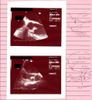
Figure 1. TEE shows AV Endocarditis in a patient with IVDA. There is a large vegetation on the aortic valve with 2-3+ AI (click to enlarge the image). Source: Double Hit – Right and Left-Sided Endocarditis in a Heroin Abuser.
- Cotrimoxazole prophylaxis was associated with a 50 percent reduction in deaths in patients starting antiretroviral therapy with CD4 counts lower than 200 cells.
- Universal influenza immunization: In 2010, the CDC expanded the recommendation for influenza vaccination to include all individuals 6 months of age and older. Previous guidelines recommended influenza vaccination for individuals over age 50 and for those at increased risk of influenza complications and close contacts of such individuals.
35% of UpToDate topics are updated every four months. The editors select a small number of the most important updates and share them via "What's new" page.
The page does not provide RSS feed for the different specialties. One solution is to copy/paste the URL address of each subspecialty page you are interested in the Google Reader "Add a subscription" field (top left corner). Google Reader will automatically create a RSS feed from this "feedless" page.
The page does not provide RSS feed for the different specialties. One solution is to copy/paste the URL address of each subspecialty page you are interested in the Google Reader "Add a subscription" field (top left corner). Google Reader will automatically create a RSS feed from this "feedless" page.
References:
What's new in infectious diseases. UpToDate, 2010.
What's new in pulmonary, critical care, and sleep medicine from UpToDate
35% of UpToDate topics are updated every four months. The editors select a small number of the most important updates and share them via "What's new" page. I selected the brief excerpts below from What's new in hematology:Asthma
When evaluating patients for occupational asthma, sputum eosinophil counts at 7 and 24 hours after specific inhalation challenge have a greater sensitivity and positive predictive value than exhaled nitric oxide (eNO).
Critical care
Proton pump inhibitors (PPIs) may be slightly more effective than histamine-2 (H2) blockers at preventing gastrointestinal (GI) bleeding in critically ill patients. However, the difference is small if real.
Idiopathic pulmonary fibrosis
Sildenafil, tyrosine kinase inhibitor imatinib, and pirfenidone, an anti-fibrotic agent, were each no more effective than placebo for treatment of idiopathic pulmonary fibrosis.
Pleural effusion
Using ultrasonography to identify a site for diagnostic thoracentesis is associated with significantly lower risk of pneumothorax, than using the physical exam for site selection.
Pulmonary embolism
PE is frequently asymptomatic. Among 5233 patients with a DVT, 32 percent had asymptomatic PE.
References:
What's new in pulmonary, critical care, and sleep medicine. UpToDate.
What's new in rheumatology from UpToDate
35% of UpToDate topics are updated every four months. The editors select a small number of the most important updates and share them via "What's new" page. I selected the brief excerpts below from What's new in rheumatology:Lower dose colchicine for treatment of acute gout
A lower dose colchicine may have similar efficacy and fewer side effects than a traditional, higher dose regimen for patients with acute gouty arthritis. Colchicine given as 1.2 mg followed by one additional dose of 0.6 mg an hour later (total dose 1.8 mg) worked similarly to 1.2 mg followed by 0.6 mg every hour for up to six hours.
Nocturnal leg cramps
Quinine is no longer recommended due to the potential for serious side effects, drug interactions, and only modest benefit. Calcium channel blockers and vitamin B complex have limited effect.
Anti-CCP antibody testing in RA
Testing for anti-citrullinated peptide/protein antibodies (ACPA) has become common in the evaluation of patients for rheumatoid arthritis (RA). Second generation anti-cyclic citrullinated peptide (anti-CCP) antibodies had the highest utility, with higher specificity and similar sensitivity to rheumatoid factor (RF). Both RF and anti-CCP testing should be performed in patients suspected of having RA. Should I order an anti-CCP antibody test to diagnose rheumatoid arthritis? http://goo.gl/L3abc - Yes. Cost of RF is $43, anti-CCP $102
Golimumab, a neutralizing human anti-tumor necrosis factor alpha monoclonal antibody, is administered subcutaneously once monthly for the treatment of rheumatoid arthritis, psoriatic arthritis and ankylosing spondylitis.
Rituximab for primary Sjogren's syndrome
Rituximab, which is used for the treatment of B cell lymphomas, rheumatoid arthritis, and other autoimmune and lymphoproliferative disorders, is a chimeric monoclonal antibody directed against the B cell antigen CD20. One course of rituximab treatment resulted in significant improvement in patients with Sjogren's syndrome (SS).
References:
What's new in rheumatology. UpToDate.
What's new in endocrinology from UpToDate
 35% of UpToDate topics are updated every four months. The editors select a small number of the most important updates and share them via "What's new" page. I selected the brief excerpts below from What's new in endocrinology:
Osteoporosis
Denosumab (Prolia)
Denosumab is a fully human monoclonal antibody that specifically targets a ligand known as RANKL (that binds to a receptor known as RANK) which is a key mediator of osteoclast formation, function, and survival. Denosumab was approved for the treatment of postmenopausal women with osteoporosis at high risk for fracture (history of osteoporotic fracture, multiple risk factors for fracture) or patients who have failed or are intolerant of other available osteoporosis therapies. Denosumab inhibits the formation, function, and survival of osteoclasts. It decreases bone resorption, increases bone mineral density (BMD), and reduces the risk of fracture.
Teriparatide (Forteo)
Teriparatide (parathyroid hormone) did not accelerate fracture healing in postmenopausal women with distal radial fractures.
Transdermal teriparatide patch worked as well as teriparatide injection in postmenopausal women with osteoporosis.
Orlistat (Xenical, Alli) in obesity
Severe liver injury has been reported rarely with the use of orlistat (13 reports). Over the ten year period of the review, an estimated 40 million people worldwide used orlistat.
References:
What's new in endocrinology and diabetes mellitus. UpToDate.
Image source: Flickr, Creative Commons license.
What's new in obstetrics and gynecology from UpToDate

35% of UpToDate topics are updated every four months. The editors select a small number of the most important updates and share them via "What's new" page. I selected the brief excerpts below from What's new in obstetrics and gynecology:
Influenza vaccination with inactivated vaccine is recommended for pregnant women, regardless of the stage of pregnancy. The 2010-2011 influenza vaccine is trivalent and includes antigens from both the 2009 pandemic H1N1 influenza virus and seasonal influenza viruses.
Use of acetaminophen during pregnancy was associated with a reduction in neural tube defects, as well as cleft lip/palate and gastroschisis. These data support the safety of acetaminophen for relief of fever and pain.
Gynecology
Like CA 125, human epididymal secretory protein E4 (HE4) is a promising biomarker for ovarian cancer. In contrast to CA 125, HE4 levels do not appear to be elevated in women with endometriosis, and thus can be useful to rule out ovarian cancer in patients with endometriosis and a pelvic mass suspected to be an endometrioma.
Sterilization does not impact sexual function. Sexual function appears to be unchanged or improved in women following tubal sterilization.
Botulinum toxin may be useful for overactive bladder syndrome (onabotulinumtoxinA, Botox®). Detrusor injection of botulinum toxin (BoNT) had a transient effect. The average time between injections was 8 to 12 months.
References:
What's new in obstetrics and gynecology. UpToDate.
Image source: Wikipedia, GNU Free Documentation License.
What's new in gastroenterology and hepatology from UpToDate

35% of UpToDate topics are updated every four months. The editors select a small number of the most important updates and share them via "What's new" page. I selected the brief excerpts below from What's new in gastroenterology and hepatology:
Peginterferon alfa-2a was superior to peginterferon alfa-2b with regard to virologic response rates in patients with chronic hepatitis C virus infection, genotypes 1, 2, 3, or 4. Patients being treated for chronic hepatitis C virus infection should receive peginterferon alfa-2a rather than peginterferon alfa-2b.
72 weeks of therapy with peginterferon alfa-2a plus ribavirin in patients with HCV genotype 1 or 4 was not better than 48 weeks.
Chronic use of proton pump inhibitors (PPIs)
Chronic use of proton pump inhibitors (PPIs) may lead to an increased risk of fractures. FDA recommends that healthcare professionals who prescribe proton pump inhibitors should consider whether a lower dose or shorter duration of therapy would adequately treat the patient's condition.
Ulcerative colitis
Once daily dosing of delayed-release mesalamine (Asacol 400 mg tablets) 1.6 to 2.4 g/day was as effective as twice daily dosing for maintenance of clinical remission in patients with ulcerative colitis. Remission rates were 85% in both groups.
Crohn's disease
Capsule endoscopy was not a cost-effective third test for establishing the diagnosis of Crohn's disease after a negative ileocolonoscopy and either a CT enterography or small bowel follow-through x-ray.
Azathioprine in combination with infliximab or infliximab alone had a higher rate of glucocorticoid-free clinical remission than those treated with azathioprine alone. Combination therapy and infliximab monotherapy led to significantly more complete bowel healing than azathioprine alone.
Obscure gastrointestinal bleeding
Double balloon enteroscopy (DBE) detected bleeding sources in 78% of patients with obscure gastrointestinal bleeding. Small intestinal ulcers and erosions were the most common findings.
References:
What's new in gastroenterology and hepatology. UpToDate.
What's new in nephrology and hypertension
 35% of UpToDate topics are updated every four months. The editors select a small number of the most important updates and share them via "What's new" page. I selected the brief excerpts below from What's new in nephrology and hypertension:
Glomerulonephritis
In idiopathic membranous nephropathy, among patients with protein excretion less than 8 grams/day, treatment with an ACE inhibitor or ARB increased the probability of remission.
Hypertension
There was no difference in the rate of myocardial infarction, stroke or death from cardiovascular causes between the intensive versus standard hypertension therapy groups, nor in the all-cause mortality rate. ('ACCORD BP trial'). Intensive therapy included goal systolic blood pressure less than 120 mmHg, standard therapy included goal systolic blood pressure less than 140 mmHg.
Hyponatremia
Tolvaptan is a vasopressin receptor antagonists. The long-term administration of tolvaptan appears to be safe and effective among patients with chronic hyponatremia. Responses were similar in heart failure and SIADH, and more modest in cirrhosis.
Transplantation
An increased incidence of angioedema has been noted in patients administered angiotensin-converting enzyme (ACE) inhibitors plus either sirolimus or everolimus.
Autosomal dominant polycystic kidney disease (ADPKD)
Activation of the mammalian target of rapamycin (mTOR) protein may contribute to cyst growth in autosomal dominant polycystic kidney disease (ADPKD). The inhibition of mTOR with rapamycin preserved renal function and inhibits epithelial cell proliferation and fibrosis in a mouse model of ADPKD. In a human trial, cyst volume was stable on rapamycin.
The long-acting somatostatin octreotide decreased liver volume by 5% in patients with autosomal dominant polycystic liver disease.
References:
What's new in nephrology and hypertension. UpToDate.
Twitter comments:
@kidney_boy (Joel Topf): UpToDate seems to be misrepresenting the ADPKD mTOR data. See my interpretation here: More ADPKD and sirolimus data: More definitive; less encouraging
Mayo Clinic on procedure competency: "140 colonoscopies isn't cool. You know what's cool, 275 colonoscopies"
Mayo Clinic: GI professional organizations have traditionally recommended that gastroenterology (GI) fellows perform 140 colonoscopies before assessing competency. Robert E. Sedlack, M.D., of the Department of Gastroenterology and Hepatology at Mayo Clinic, discusses findings that suggest it takes an average of 275 procedures to acquire the skills needed to perform safe and effective exams.
The quote is from here:
"The Social Network" tells the story of how Facebook went from a college startup to essentially the only way that old friends keep in touch. Napster founder-turned-Facebook president Sean Parker gives site creator Mark Zuckerberg, some shrewd financial advice. "A million dollars isn't cool. You know what's cool? A billion dollars," he says.
Subscribe to:
Posts (Atom)


