
Showing posts with label factors. Show all posts
Factors that Promote Positive Adaptation to Stress and Adversity

Factors that Promote Positive Adaptation to Stress and Adversity

The phenomenon of resilience reflects positive adaptation despite contexts of risk, adversity, or trauma.

Factors that promote positive adaptation to stress and adversity include the following:

- self-esteem
- optimism
- internal control
- coping aimed at acceptance
- coping aimed at seeking emotional support
- social contacts


Tips for managing stress (2-minute BBC video):

- Take a few deep breaths
- Get plenty of exercise
- Socialize - don't stress alone, talk to someone and have a laugh
- Get out - go to the park

Read more: http://www.bbc.co.uk/scotland/brainsmart

References:

Psychological and Social Factors that Promote Positive Adaptation to Stress and Adversity in the Adult Life Cycle. M. Guadalupe Jiménez Ambriz, María Izal and Ignacio Montorio. Journal of Happiness Studies, 2011.

94% of Americans score at “poor” level on at least one of the 7 factors defining ideal cardiovascular health

More than 90% of Americans score poorly on at least one of the American Heart Association’s 7 factors defining ideal cardiovascular health.

The 7 factors (with lack of a diagnosis of heart or blood vessel disease) include:

- smoking status
- weight
- physical activity
- healthy diet
- cholesterol concentration
- blood pressure
- fasting glucose concentration

The new data by CDC and NIH show that 94% of US adults score at a “poor” level on at least one of those factors and that 38% have at least 3 factors at a poor level.

References:

US citizens score poorly on ratings of cardiovascular risk factors. BMJ 2012; 344 doi: 10.1136/bmj.e22 (Published 4 January 2012).
5 factors define happiness at work

5 factors define happiness at work

Research on psychological well-being at work (PWBW) is challenging.

Factor analysis revealed that psychological well-being at work can be conceptualized through 5 dimensions:

- Interpersonal Fit
- Thriving
- Feeling of Competency
- Desire for Involvement
- Perceived Recognition

This also applies to the training of medical residents and fellows. It is important to create an environment that promotes collaboration and personal growth, while avoiding exhaustion and finger pointing.

References:

What is Psychological Well-Being, Really? A Grassroots Approach from the Organizational Sciences. Véronique Dagenais-Desmarais and André Savoie. Journal of Happiness Studies, 2011.
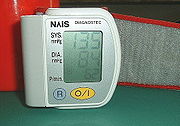
10 risk factors are associated with 90% of the risk of stroke

The Lancet reported that in 3000 patients with stroke (78%, with ischaemic stroke; 22%, with intracerebral haemorrhagic stroke) and 3000 controls, significant risk factors for all types of stroke were:

- history of hypertension (OR 2·64)
- current smoking (2·09)
- waist-to-hip ratio (1·65)
- diet risk score (1·35)
- regular physical activity (0·69)
- diabetes mellitus (1·36)
- alcohol intake (1·51)
- psychosocial stress (1·30)
- depression (1·35)
- cardiac causes (2·38)
- ratio of apolipoproteins B to A1 (1·89)

Collectively, these risk factors accounted for 88·1% of the PAR for all strokes. When an alternate definition of hypertension was used (history of hypertension or blood pressure higher than 160/90 mm Hg), the combined PAR was 90·3% (85·3—93·7) for all stroke.

These risk factors were all significant for ischaemic stroke, whereas hypertension, smoking, waist-to-hip ratio, diet, and alcohol intake were significant risk factors for intracerebral haemorrhagic stroke.

Ten risk factors are associated with 90% of the risk of stroke. Targeted interventions that reduce blood pressure and smoking, and promote physical activity and a healthy diet, could substantially reduce the burden of stroke.

References:
Stroke Risk Calculator http://goo.gl/elmc
Image source: BP device used for measuring arterial pressure. Wikipedia, GNU Free Documentation License.

Promise of Prevention: Effects of 4 Risk Factors on U.S. Life Expectancy and Disparities

This analysis included 4 preventable risk factors:

- smoking
- high blood pressure
- elevated blood glucose
- adiposity

The researchers estimated the effects of these 4 preventable risk factors on national life expectancy and on disparities in life expectancy and disease-specific mortality among 8 subgroups of the US population (the “Eight Americas”). The groups were defined on the basis of race, location and socioeconomic characteristics of county of residence, in 2005.

Who has the lowest number of risk factors?

Asians had the lowest mean body mass index, fasting plasma glucose, and smoking; whites had the lowest systolic blood pressure (SBP).

Who has the highest number of risk factors?

Systolic blood pressure (SBP) was highest in blacks, especially in the rural South - 5-7 mmHg higher than whites. The other three risk factors were highest in Western Native Americans, Southern low-income rural blacks, and/or low-income whites in Appalachia and the Mississippi Valley.

How much shorter is life expectancy if you have the risk factors?

These 4 risk factors reduced life expectancy at birth by 5 years in men and 4 years in women.

Life expectancy effects were smallest in Asians (M, 4.1 y; F, 3.6 y) and largest in Southern rural blacks (M, 6.7 y; F, 5.7 y).

Smoking and high blood pressure had the largest effect on life expectancy disparities.

Disparities in the 4 risk factors (smoking, blood pressure, blood glucose, and adiposity) explain a significant proportion of disparities in mortality from cardiovascular diseases and cancers. They also explain some of the life expectancy disparities in the US.

References:
Danaei G, Rimm EB, Oza S, Kulkarni SC, Murray CJL, et al. (2010). The Promise of Prevention: The Effects of Four Preventable Risk Factors on National Life Expectancy and Life Expectancy Disparities by Race and County in the United States. PLoS Med 7(3): e1000248. doi:10.1371/journal.pmed.1000248
Image source: Wikipedia, public domain.

2 in 3 people with known risk factors for COPD don't know they have the disease

One in five heavy smokers over age 40 have findings of COPD, but only one-third have been previously diagnosed with the common lung disease.

10% of people worldwide over the age of 40 are affected by COPD.

Researchers screened 1,003 people aged 40 and over who were current or former heavy smokers. Heavy smoking was defined as a smoking history of 20 pack-years or more.

The results showed that 20.7% of the people screened met the criteria for a diagnosis of COPD but only 32.7% had previously been diagnosed with the disease or were aware of their COPD diagnosis.

References:
Many Unaware They Have COPD. WebMD.
Image source: Lungs, Wikipedia, public domain.