Showing posts with label sunglasses?. Show all posts

People behaved more selfishly and dishonestly when working in a dimly lit room or when wearing sunglasses

Researchers found that people working in a dimly lit room were more likely to cheat about their own performance on a task in order to earn more money than people working in a well-lit room.

Darkness may create a sense of illusory anonymity that disinhibits self-interested and unethical behaviors. It appears to induce a false sense of concealment, leading people to feel that their identities are hidden.

References:
Dim Lighting and Sunglasses Encourage Unethical Behavior in Study. WebMD.
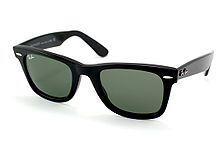
Image source: Ray Ban Original Wayfarer, Wikipedia, Creative Commons Attribution-Share Alike 3.0 Unported license.

Comments from Twitter and Facebook:

@scanman: RT @DrVes: when working in a dimly lit room http://goo.gl/fb/erLEf

@doctorwhitecoat: Clubbing/bars? RT @DrVes People behaved more selfishly/dishonestly when in a dimly lit room or when wearin sunglasses http://goo.gl/fb/erLEf

Mike Cadogan: "Recently started working in the office with the light on...feeling better and more energetic already, though not sure about the selfish/dishonest part..."

What to look for when buying sunglasses?

From the NYTimes:

Unprotected exposure to sunlight can cause significant damage to the eyes

Sunlight can burn the surface of the eye, causing a temporary and painful condition known as photokeratitis. Over time, unprotected exposure can contribute to cataracts, as well as cancer of the eyelids and the skin around the eyes.

UV exposure also may increase the risk of macular degeneration, the leading cause of blindness in people over age 65.

What to look for when buying sunglasses?

Look for labels indicating at least “98 percent UV protection” or that it “blocks 98 percent of UVA and UVB rays.” If there is no label, or it says something vague like “UV absorbing” or “blocks most UV light,” don’t buy them.

For the best defense, look for sunglasses that “block all UV radiation up to 400 nanometers,” which is equivalent to blocking 100 percent of UV rays

Sunglasses should cover the sides of your eyes to prevent stray light from entering. Wraparound lenses are best. Look for close-fitting glasses with wide lenses. Avoid models with small lenses, such as "John Lennon-style" sunglasses.

UV protection is not related to how dark the lens is. Sunglasses tinted green, amber, red and gray may offer the same protection as dark lenses.

Polarized lenses block the horizontal light waves that create glare. But remember, polarization in itself will not block UV light.

You should be able to find a pair of drugstore sunglasses for $10 to $20 that provide all the protection you need.

Sunglasses 101 - Cleveland Clinic video:


References:

Let the Sunshine in, but Not the Harmful Rays. NYTimes, 2011.
Image source: OpenClipArt.org, public domain.