Showing posts with label Excess. Show all posts

Management of Hirsutism (Excess Hair)

Hirsutism is a source of significant anxiety in women. While polycystic ovary syndrome (PCOS) or other endocrine conditions are responsible for excess androgen in many patients, other patients have normal menses and normal androgen levels (“idiopathic” hirsutism).

The finding of polycystic ovaries on ultrasound is not required for the diagnosis of polycystic ovary syndrome (PCOS). Gonadotropin-dependent ovarian hyperandrogenism is believed to cause PCOS. However, mild adrenocorticotropic-dependent adrenal hyperandrogenism also is a feature in many cases.

Even women with mild hirsutism can have elevated androgen levels, and thus, they may benefit from a laboratory evaluation.

Laser treatment does not result in complete, permanent hair reduction, but it is more effective than other methods such as shaving, waxing, and electrolysis. It produces hair reduction for up to 6 months. The effect is enhanced with multiple treatments. Interestingly, a portable laser hair removal device is currently available from Amazon (this post is not a recommendation or endorsement of the product).

References:

Update on the management of hirsutism. Cleveland Clinic Journal of Medicine June 2010 vol. 77 6 388-398.

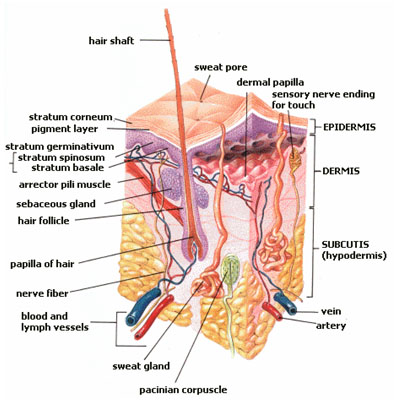
Image source: Skin layers. Wikipedia, public domain.

A home hair removal laser device is available without prescription from Amazon.com (not a recommendation to buy any product, see the link below). A similar device is available from Costco.

Hirsutism or Excess Hair


From NHS Choices YouTube channel: Hirsutism causes excess hair growth in women, such as on the face and chest. An expert explains the causes or hirsutism, treatments such as hair-removal and cosmetic techniques, and where to go for help if you're worried about excess hair growth.

The Cleveland Clinic Journal of Medicine published an Update on the management of hirsutism in 2010:

Hirsutism is a source of significant anxiety in women. While polycystic ovary syndrome (PCOS) or other endocrine conditions are responsible for excess androgen in many patients, other patients have normal menses and normal androgen levels (“idiopathic” hirsutism).

The finding of polycystic ovaries on ultrasound is not required for the diagnosis of polycystic ovary syndrome (PCOS). Gonadotropin-dependent ovarian hyperandrogenism is believed to cause PCOS. However, mild adrenocorticotropic-dependent adrenal hyperandrogenism also is a feature in many cases.

Even women with mild hirsutism can have elevated androgen levels, and thus, they may benefit from a laboratory evaluation.

Laser treatment does not result in complete, permanent hair reduction, but it is more effective than other methods such as shaving, waxing, and electrolysis. It produces hair reduction for up to 6 months. The effect is enhanced with multiple treatments. Interestingly, a portable laser hair removal device is currently available from Amazon (this post is not a recommendation or endorsement of the product).

References:

Update on the management of hirsutism. Cleveland Clinic Journal of Medicine June 2010 vol. 77 6 388-398.

A home hair removal laser device is available without prescription from Amazon.com (not a recommendation to buy any product, see the link below). A similar device is available from Costco.

Too much of a good thing? Excess fluoride in water supply causes dental
problems

Too much of a good thing? Excess fluoride in water supply causes dental problems


For the first time in nearly 50 years, the government is recommending lowering the fluoride in drinking water. Officials say many Americans are getting too much fluoride and it's causing some kids to have "splotchy" teeth. The AP's Kelly Daschle reports.

The US health department is recommending that water supplies contain 0.7 milligrams of fluoride per liter of water, replacing the current recommended range of 0.7 to 1.2 milligrams.

Learn how much fluoride is in your tap water. Call your local water municipality because the level varies from city to city. If it's above 0.7 milligrams per liter, you could consider filtering your water.

References:
U.S. Wants to Reduce Fluoride in Drinking Water. WebMD.