Showing posts with label adults. Show all posts

Depression treatment is as effective in older (over 65) as in younger adults

Depression in later life, traditionally defined as age older than 65, is associated with disability, increased mortality, and poorer outcomes.

Compared to younger adults with depression:

- cognitive and functional impairment and anxiety are more common in older adults

- older adults with depression are at increased risk of suicide

Depression is associated with cognitive impairment and an increased risk of dementia.

A selective serotonin reuptake inhibitor (SSRI) should be the first line pharmacological treatment for depression for most older adults.

Psychological and drug treatment is as effective in older as in younger adults

References:

Depression in older adults. Rodda et al. BMJ, 2011.

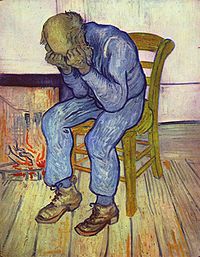
Image source: Vincent van Gogh's 1890 painting At Eternity's Gate. Wikipedia, public domain.

Osteoarthritis at the base of the thumb has a 15-30% prevalence in adults

What is it?

Patients with osteoarthritis of the thumb carpometacarpal joint, or base of the thumb, commonly seek help for their symptoms. Arthritis at the base of the thumb causes functional disability and pain, particularly with “pinching” actions.


A hand with arthritic changes. Image source: Cicadas, a Creative Commons license.

How common is osteoarthritis of the thumb?

The prevalence of this condition increases with age and is greatest in postmenopausal women. It ranges between 15% prevalence in adults in Finland and a 33% prevalence in postmenopausal women. This is likely to increase as populations age and people stay active for longer.

How to diagnose it?

Pain reproduced on the axial grind test localizes pathology to the base of the thumb.

Trapeziometacarpal and scaphotrapeziotrapezoid joints should be assessed with plain radiographs (X-rays) that typically show degenerative changes. However, X-rays may underestimate the extent of the disease.

What to do?

Non-operative treatments can ameliorate symptoms and delay surgery in most patients with osteoarthritis of the thumb:

- behaviour modification
- pain relief
- splinting
- corticosteroid injections

No single operative procedure has been shown to be superior:

- simple trapeziectomy has the lowest complication rate
- arthrodesis may be the best option for patients who value pain relief and reliable strength and stability more than mobility (such as younger manual workers)

Piano lesson: "Rachmaninov had big hands". See how one gets 4 million views on YouTube:


References:

Osteoarthritis at the base of the thumb. BMJ, 2011.

Gambling disorders affect 0.2-5% of adults

Gambling opportunities have expanded around the world and consequently gambling disorders (pathological gambling and problem gambling) have received increased attention.

Gambling disorders affect 0.2-5.3% of adults. They are highly comorbid with other mental health and substance use disorders.

Several treatment approaches have been favorably evaluated:

- cognitive behavioral models
- brief treatment models
- pharmacological interventions

Although promising, family therapy and support from Gamblers Anonymous are less well empirically supported.

References:

Gambling disorders. The Lancet, Volume 378, Issue 9806, Pages 1874 - 1884, 26 November 2011.

Image source: United States one-dollar bill. Wikipedia, public domain.

Unintentional Weight Loss in Older Adults - 2014 review of Am Fam Physician

Unintentional weight loss in persons older than 65 years is associated with increased morbidity and mortality.

What are the causes?

The most common etiologies are:

- malignancy
- nonmalignant gastrointestinal (GI) disease
- psychiatric conditions

Overall, nonmalignant diseases are more common causes of unintentional weight loss in this population than malignancy.

Medication use and polypharmacy can interfere with taste or cause nausea and should not be overlooked. Social factors may contribute to unintentional weight loss.

A readily identifiable cause is not found in 16% to 28% of cases.

What tests may be done?

Recommended tests include a complete blood count, basic metabolic panel, liver function tests, thyroid function tests, C-reactive protein levels, erythrocyte sedimentation rate, glucose measurement, lactate dehydrogenase measurement, and urinalysis.

Chest radiography and fecal occult blood testing should be performed. Abdominal ultrasonography may also be considered.

When baseline evaluation is unremarkable, a three- to six-month observation period is justified.

What are the treatment options?

Treatment focuses on the underlying cause. Nutritional supplements and flavor enhancers, and dietary modification that takes into account patient preferences and chewing or swallowing disabilities may be considered. Appetite stimulants may increase weight but have serious adverse effects and no evidence of decreased mortality.

References:

Unintentional Weight Loss in Older Adults. Gaddey HL1, Holder K2. Am Fam Physician. 2014 May 1;89(9):718-722.
http://www.ncbi.nlm.nih.gov/pubmed/24784334

Image source: Wikipedia, public domain.

The diabetes pandemic: 1 in 4 U.S. adults now has diabetes

The number of adults with diabetes has doubled within the past 30 years.

70% of the increase is attributed to population growth and ageing. However, the number also reflects the unfortunate global shift towards a western lifestyle of unhealthy diet and physical inactivity, with obesity as the outcome.

Between 1980 and 2008, the global body-mass index (BMI) increased by 0·4—0·5 kg/m2 per decade.

In the USA, 10% of infants and toddlers already carry excess weight. More than 20% of children between the ages of 2 years and 5 years are overweight or obese.

By 2030, the number of individuals with diabetes worldwide is expected to rise to half a billion (470 million) - almost 80% of whom will be in low-income and middle-income countries. In these regions, diabetes drugs and insulin are often inaccessible or are too expensive.

References:
The diabetes pandemic. The Lancet, Volume 378, Issue 9786, Page 99, 9 July 2011.
Image source: Wikipedia, public domain.
Related from Amazon - pancreas plush toy:

Approach to evaluation and management of syncope in adults - BMJ Review

Syncope is common in all age groups, and it affects 40% of people during their lifetime, usually described as a "faint" or "blackout".

Neurally mediated syncope, which is benign, is the most common cause

Cardiac syncope as a result of arrhythmias or structural cardiopulmonary disease is more common with increasing age. Cardiac syncope is associated with increased mortality and must be excluded.

Brain imaging, carotid Doppler ultrasound, electroencephalography, and chest radiography are often not needed in patients with syncope.

References:
An approach to the evaluation and management of syncope in adults. BMJ 2010;340:c880.
http://www.bmj.com/cgi/content/short/340/feb19_1/c880
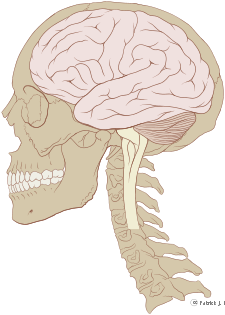
Image source: Illustration of the human brain and skull. Wikipedia, Patrick J. Lynch, medical illustrator, Creative Commons Attribution 2.5 License 2006.

Can a Midday Nap Make You Smarter? Adults Who Nap for 90-minutes at 2 PM Learn and Perform Better at Tests

According to a new study, if you devote your lunch hour to a nap, you may perform and learn better in the afternoon.

Napping at midday, when the brain's ability to learn may have deteriorated, may clear the brain's memory "storage area" and make room for new information.

In the study, the nap group was given the chance for a 90-minute siesta at 2 p.m.; the no-nap group was asked to stay awake.

People in the group which didn't nap had a 10% reduction in their learning capacity. The people who had a nap improved their ability to learn by 10% (not much).

References:
Image source: Sleeping kitten. Wikipedia, Tilman Piesk, public domain.

18% tax on pizza and soda can decrease U.S. adults' weight by 5 pounds (2 kg) per year


Nearly a third of American children are overweight or obese. In our inner cities a prevalence of obesity of more than 50% is not uncommon. Too many calories in, too little energy out.

With two-thirds of Americans either overweight or obese, policymakers are increasingly looking at taxing as a way to address obesity on a population level.

The tobacco experience showed that education is not enough: regulation, litigation, and legislation are needed too. Increasing taxes on cigarettes has been the single most effective strategy in reducing smoking.

An important part of the obesity story is clearly the huge increase in consumption of sugar sweetened beverages (SSBs): carbonated sodas, sweet teas, energy drinks, flavoured water, and sports drinks. Their use has more than doubled in recent years.

"Sadly, we are currently subsidizing the wrong things including the product of corn, which makes the corn syrup in sweetened beverages so inexpensive."

Instead, the agricultural subsidies should be used to make healthful foods such as locally grown vegetables, fruits and whole grains less expensive.

Danish government imposed 25% tax on ice cream, chocolate, sweets, and will increase taxes on soft drinks, tobacco, alcohols to combat obesity, heart disease, and other illnesses. BMJ. http://goo.gl/ixc0

 Some pizzas are 'saltier than the sea' (NHS blog).

References:
Tax soda, pizza to cut obesity, researchers say | Reuters.
Image source: Soft drinks, Wikipedia, public domain.

Following DASH Diet Improves Brain Activity in Overweight Adults

A new study suggest that the DASH diet in combination with regular exercise improves mental activity by 30% in overweight adults compared with those who didn’t diet or exercise. The DASH diet was developed for the Dietary Approaches to Stop Hypertension (DASH) study and emphasizes low-fat dairy products and low-cholesterol foods as well as carbohydrates and fruits and vegetables.

Researchers say high blood pressure affects about 50% of adults aged 60 and older and increases the risk of Alzheimer’s disease and other forms of mental decline like dementia.

These are 5 healthy lifestyle factors associated with a lower risk of developing high blood pressure:

1. Healthy weight: body mass index (BMI) of less than 25.
2. Daily exercise: average of 30 minutes of vigorous exercise per day.
3. Heart-healthy diet (DASH).
4. Moderate alcohol use.
5. Use non-narcotic pain relievers less than once per week.

References:

DASH Diet Fuels the Brain - WebMD.
Top diets of 2012 - from Cleveland Clinic health blog http://buff.ly/X2I4BJ
6 healthy lifestyle factors associated with a lower risk of developing high blood pressure
A table to show the impact of lifestyle interventions on blood pressure http://bit.ly/johjzs - Great for patient education.

Related:

What is the best diet in the world? DASH Diet, according to the latest review. TIME, 2011.
The long history of dieting fads: "soap should be eaten for its diuretic properties", wrote a prominent surgeon in 1810. Lancet, 2012
Managing fever of unknown origin in adults - BMJ review

Managing fever of unknown origin in adults - BMJ review

Few clinical problems generate such a wide differential diagnosis as pyrexia (fever) of unknown origin. The initial definition proposed by Petersdorf and Beeson in 1961 was later revised. Essentially the term refers to a prolonged febrile illness without an obvious cause despite reasonable evaluation and diagnostic testing.

Definition

Classic adult fever of unknown origin (FUO) is fever of 38.3°C (101°F) or greater for at least 3 weeks with no identified cause after 3 days of hospital evaluation or 3 outpatient visits

Causes of FUO

Common causes of FUO are infections, neoplasms, and connective tissue disorders.

Investigations almost always include imaging studies. Serological tests may be indicated

Treatment of FUO

Empirical antibiotics are warranted only for individuals who are clinically unstable or neutropenic. In stable patients empirical treatment is discouraged, although NSAIDs may be used after investigations are complete. Empirical corticosteroid therapy is discouraged.

References:
Investigating and managing pyrexia of unknown origin in adults. BMJ 2010; 341:c5470 doi: 10.1136/bmj.c5470 (Published 15 October 2010).
Image source: Wikipedia, public domain.

1 in 40 adults older than 40 years has glaucoma

One in 40 adults older than 40 years has glaucoma with loss of visual function.

Adults have one of the two forms of glaucoma:

- open-angle glaucoma
- angle-closure glaucoma

Diagnosis

At least half of glaucoma cases are undiagnosed. Glaucoma is mostly asymptomatic until late in the disease when visual problems arise. Vision loss from glaucoma cannot be recovered.

Treatment

Glaucoma is treated with daily eye-drop drugs, but adherence to treatment is often unsatisfactory.

Similarities to the pathogenesis of common CNS diseases mean that common neuroprotective strategies might exist. Successful gene therapy has been used for some eye diseases and may be possible for the treatment of glaucoma in the future.

References:
Glaucoma. The Lancet, Volume 377, Issue 9774, Pages 1367 - 1377, 16 April 2011.
Image source: Eyelashes, Wikipedia, Steve Jurvetson, Creative Commons Attribution 2.0 Generic license.