Showing posts with label doctor. Show all posts
One doctor prescribed more than a million hydrocodone tablets

One doctor prescribed more than a million hydrocodone tablets

A California diet center doctor known by patients as “Candy Man” was sentenced to four years in federal prison for dispensing what authorities said were massive amounts of powerful painkillers in exchange for cash.

Records revealed that he ordered more than a million hydrocodone tablets in 2008, more than any other doctor in the nation.

Prosecutors estimated that he made nearly $700,000 that year from selling controlled substances. However, authorities said they couldn’t account for 75% of the pills purchased over a 13-month period because he didn’t keep records of the transactions.

In the meantime, the NYTimes reports that Florida is shutting ‘Pill Mill’ clinics. Florida has long been the nation’s center of the illegal sale of prescription drugs: some doctors there bought 89% of all the Oxycodone sold in the country last year. This has changed dramatically with the introduction of new legislation.

References:
Doc gets 4 years for dispensing drugs for cash. MSNBC.
Florida Shutting ‘Pill Mill’ Clinics. NYTimes.
Image source: public domain.
Should a doctor block his/her patients on Google+ or Twitter?

Should a doctor block his/her patients on Google+ or Twitter?

According to the Guardian newspaper, the current UK guidelines state that "Doctors must not "friend" their patients on Facebook."

Should a doctor block his/her patients on Google+ then? What about Twitter?

Social media platforms, their use, and the perception of the ways they are used are all changing. The ban of professional use of the most popular services is not the way forward.

Doctors are natural communicators and should do very well on social media platforms. Patients, and society in general, would only benefit from physicians who share ideas and focus on education.

Simple guidance for social media use

The suggested guidance for social media use by health professionals is very simple and based on a recent book by a nurse and social media advocate:

1. Remember the basics:

- your professional focus
- the laws around patient privacy (HIPAA in the U.S.)
- the professional standards of regulatory bodies and of your employers

2. After that, explore all the different social media tools that are out there:


The Cycle of Online Information (click to enlarge the image).

12-Word Social Media Policy by Mayo Clinic: "Don’t Lie, Don’t Pry, Don’t Cheat, Can’t Delete, Don’t Steal, Don’t Reveal" (http://goo.gl/1Jwdo).

References:

Facebook friends a no-no for doctors. Guardian.
Doctors are natural communicators - social media is extension of what they do every day

Comments from Google+:

Steven Eisenberg - Create a circle of patients and share/filter as appropriate? Hmmmm... Thoughts?

Neil Mehta - In real life, what would you do if you run into a patient at a party? At a grocery store? Would BMA ask the docs to not talk with them? Turn their backs? Would that be professional? Do you ask you patients about their hobbies, interests travels? Does it help you become a more patient-centered provider?
Social Media is here to stay. Just as we have boundaries in RL we need to talk about appropriate boundaries in SoMe. The answer is probably use common sense and put the interest of the patient first. In some countries, it is routine practice to give your patient your cell phone number. So does the answer depend on your cultural and societal norms? It is a slippery slope and a number of issues need to be figured out - privacy, reimbursement, liability etc. What if the Social (professional) network exchange was behind appropriate firewalls/tunneled, what if the pts, PHR was accessible? What if we had a ACO model with no fee for service but the system was responsible for keeping their patients healthy?

Jeffrey Benabio, MD - Ves, here's the comment I put on David Lewis's post:

The difficulty is in how we define friends in this space. The doctor-patient relationship is unique and it's difficult (usually impossible) to have both a healthy friendship and healthy doctor-patient relationship without compromising both.

Patients depend on me, not as a friend, but as their physician. The expectations for a friend and a physician are different; it is difficult to have two sets of expectations for the same person.

As a physician, I'm privy to information that is personal, sometimes compromising, and often affects other people that both I and the patient knows. Patients must share things with me that they would never share with a friend. My duty as physician is only to care for her; if she and I were friends, then what she shared with me could be damaging to her in her social or personal life. I could not be both her friend and her physician.

Friends can also sometimes become romantic partners. This is verboten in a doctor-patient relationship.

The relationship between friends must be egalitarian and mutual. This is not true of doctor-patient relationships. I must advise patients what to do. I cannot tell my patients about my problems ("Boy you think that's a rash, look at this one on my leg!").

Their role as patient is to get and stay well. My role is to do everything in my ability to help them achieve that. They pay me to do this. They expect me to do this. There cannot be any reciprocity.

In fact, unlike friends, it's inappropriate for physicians to accept gifts from patients. Do patients who buy me a bottle of wine get special treatment? Do my "friend" patients have special access to me? Special privileges? It would be unfair to all my "non-friend" patients. This is where something innocuous in a friendship becomes unethical in medicine.

I examine, touch and sometimes hurt patients this is unique to medicine. Imagine that I must touch the genitals of a patient to treat him or her. This action has no place in a friendship and both the doctor-patient relationship the friendship would be compromised.

Imagine if a patient found that my political or religious beliefs were inconsonant with his beliefs. This could compromise my ability to be the best physician for him if he was unable to trust me because I was Jewish or Muslim or Catholic. This might force him to find a new physician at a time when he's sick or vulnerable and would compromise his ability to get the best care.

I have a great relationship with my patients; we are friendly and engage in enjoyable conversations about life, politics and the weather. But each of these relationships is a doctor-patient relationship that best serves the needs of the patient above all else.

The problem with social media friendships for physicians is that they're too close to real life friendships. All my online patient friends are "doctor-patient-friends" and I endeavor to keep it that way for their sake.

Steven Eisenberg - Jeffrey- SO well said. Very complex indeed.

Nancy Onyett, FNP-C - I totally agree with Jeffrey Benabio MD. The AMA and ANA for Advanced Practice has these points under the Code of Ethics for Professioal Conduct. Dr. Benabio breaks this down ito layman terms. Great post TY:)

Neil Mehta - Great discussion. Social Media (web 2.0) means a two way discussion as opposed to a static one way lecture (web 1.0). The facebook model is just one type of a social networking model which is one type of social media (medium). Seems professional bodies would not want us to "Friend" our patients and most people would agree. "Friend" is very much a FB term which has a connotation that means Friends see each others posts, photos, videos on Facebook. What do people think of doctor-patient communications using Online Social Media in the broad sense of the term?

Examples include:

A doctor posts some patient education material on YouTube that the patient sees and comments on.
What about the functionality of asymmetric circles? That prevents reciprocity.
We have seen how sending periodic SMS to pts with chronic conditions improves adherence. Is it possible to extend that model?

Nancy Onyett, FNP-C - I feel safer using my own EMR for patient correspondence through encrypted email. I am not sure if creating a circle of patients would be feasible unless it was for education and HIPPA/Privacy would not be violated --may be difficult to do.

Bader ALHablani - Great discussion...please allow me to ask a question here.Quote from the article: "Yet accepting Facebook friends presents doctors with difficult ethical issues," he said. "For example, doctors could become aware of information about their patients that has not been disclosed as part of a clinical consultation." End of quote. Suppose patient XYZ is one of my friends on Google+. And I am following Dr. ABC and vice versa. What would happen when I post an article (to my extended circles) and patient XYZ writes a comment/reply that contain an information which “could [make] Dr. ABC “aware of information about their patients that has not been disclosed as part of clinical consultation”, please? Dr. ABC would be able to see his/her comments, right please?

doc emer - I also have excellent friendship relationships with my online patient-friends in FB. I think it even helps in treatment/management. Problems may occur, as in any form of communicating, but are rare and isolated. A good doctor is friends with his patients, be it online or otherwise.

Michael Zelman - Psychologists have explicit rules about avoiding multiple relationships, being "friends" with patients falls under that category. The intent is to protect the patient and therapeutic relationship between client and professional. There are obvious parallels between physician and patient. This is not to say that every aspect of a social media relationship would be negative, but virtual friending can blur boundaries, change expectations, violate confidentiality, and lead to expectations of more out of the relationship than is healthy or allowed. It may be possible to navigate social media relationships while avoiding multiple relationships with a practitioner as a business; i.e., group practice, hospital, community clinic where patients and community members follow the entity (not individual), but in a 1-way, asymmetric manner as proposed above. Even with that much care is needed to protect patient rights under various Federal and State privacy laws.

http://www.apa.org/ethics/code/index.aspx

"3.05 Multiple Relationships

(a) A multiple relationship occurs when a psychologist is in a professional role with a person and (1) at the same time is in another role with the same person, (2) at the same time is in a relationship with a person closely associated with or related to the person with whom the psychologist has the professional relationship, or (3) promises to enter into another relationship in the future with the person or a person closely associated with or related to the person.

A psychologist refrains from entering into a multiple relationship if the multiple relationship could reasonably be expected to impair the psychologist's objectivity, competence, or effectiveness in performing his or her functions as a psychologist, or otherwise risks exploitation or harm to the person with whom the professional relationship exists.

Multiple relationships that would not reasonably be expected to cause impairment or risk exploitation or harm are not unethical.

(b) If a psychologist finds that, due to unforeseen factors, a potentially harmful multiple relationship has arisen, the psychologist takes reasonable steps to resolve it with due regard for the best interests of the affected person and maximal compliance with the Ethics Code.

(c) When psychologists are required by law, institutional policy, or extraordinary circumstances to serve in more than one role in judicial or administrative proceedings, at the outset they clarify role expectations and the extent of confidentiality and thereafter as changes occur. (See also Standards 3.04, Avoiding Harm, and 3.07, Third-Party Requests for Services.)


A doctor who loves night shifts

Emergency medicine physician, world-class educator and blogger extraordinaire Dr. Mike Cadogan was recently interviewed by Elsevier Australia:

Interviewer:

What are the best and worst parts of night shifts? Do you have any tips for surviving nights?

Mike Cadogan:

I love night shifts. The dark corridors, the cool air, the rising moon, the autonomy of decision-making, the authority, the midnight snacks and the sense of joyous achievement walking home with the sun rising and against the tide of tired, depressed faces gripping their morning coffees and bemoaning the need to be at work on such a glorious sunny day…

Think positive, be strong and enjoy autonomy. Remember that everybody else is on night shift with you, and most of them don’t want to be there either…but there is no need to be grumpy, rude, or pompous. Make friends with the night owls and collaborate, you will find your workload will dramatically decrease… Make enemies with the permanent night staff at your peril!

References

Interview with Mike Cadogan, author of the acclaimed On Call: Principles and Protocols by Student Ambassador Emma Sharp.
Image source: A halo around the Moon. Wikipedia, GNU Free Documentation License.

Doctor invents female condoms with 'teeth' to fight rape


From CNN:

The woman inserts the latex condom like a tampon. Jagged rows of teeth-like hooks line its inside and attach on a man's penis during penetration. Once it lodges, only a doctor can remove it. The doctor inventor says: "It hurts, he cannot pee and walk when it's on. If he tries to remove it, it will clasp even tighter. Yes, my device may be a medieval, but it's for a medieval deed that has been around for decades."

Critics say the female condom is not a long-term solution and makes women vulnerable to more violence from men trapped by the device.

References:

South African doctor invents female condoms with 'teeth' to fight rape. CNN.

Comments from Twitter:

@Skepticscalpel: Great idea. The rapist would likely kill the victim.

@medical__news: I don't know, but old times chastity belts sound more promosing than this invention.

@DrJerath: Wow - interesting.

WebMD Symptom Checker is not for the faint-hearted - you need a real doctor

So, you feel some trembling and you decide to see what the options might be on WebMD Symptom Checker... After a couple of clicks, the computerized algorithm suggests that you may be a cannibal:


This is exactly why you need to see a real doctor instead of relying on online symptom checks, Google and Facebook.

Link via FailBlog and Berci.
A doctor admits: "I love to blog but I still don’t really know why"

A doctor admits: "I love to blog but I still don’t really know why"

From Mike Cadogan, the founder of one the most popular medical blogs Life in The Fast Lane, based in Australia:

I blog to vent, to educate, to converse, to cogitate, to archive thoughts and to stimulate discussion.

I love the concept of a launching a thought, an image, a moment… into the inferno of the blogosphere, and observing the response.

With the average blog-reader attention span being around 90 seconds, I find that most of my ‘good’ posts – thoroughly researched, with well constructed arguments and propositions… are lost on this ‘average‘ reader… Yet, strangely I feel better having taken the time to arrange my thoughts, review the evidence and archive the information.

The advent of Facebook and Twitter has changed the way readers comment and share, and in many cases the promoted discussion continues out-with the confines of the original medium…

I love to blog but I still don’t really know why…


My reply is here:

You blog because you have to, Mike. And we are lucky to have you as a writer.

I have more prosaic and simple reasons to keep several blogs focused on different aspects of clinical practice: internal medicine, allergy and immunology, pediatrics, and IT.

I simply blog as a way to keep track of the new developments in medicine that are relevant to my practice and patients. The blog is a digital notebook and an archive accessible from any place and device with an internet connection.

A lot of people find it useful and that's great but this is an added bonus. If I don't find a blog post interesting and useful, I don't hit the "publish" button. A custom-made Google search engine makes it all searchable in 0.2 seconds. It just works.

Quotes from an interview with Seth Godin and Tom Peters:

"Blogging is free. It doesn’t matter if anyone reads it. What matters is the humility that comes from writing it. What matters is the metacognition of thinking about what you’re going to say.

No single thing in the last 15 years professionally has been more important to my life than blogging. It has changed my life, it has changed my perspective, it has changed my intellectual outlook, it’s changed my emotional outlook.

And it’s free."


Comments from Google Plus:

Neil Mehta - Loved your poetic post. I attempted to reflect on this earlier this year and came up with some reasons http://blogedutech.blogspot.com/2011/05/reflections-on-why-do-i-blog.html but find that it does not come close to your beautiful prose. Thanks for sharing.

References:

Why I Blog?
Why I Blog: Andrew Sullivan from The Atlantic Shares His Thoughts on Blogging
Why Do I Blog?
Why blog? Notes from Dr. RW. A perfectly reasonable list. All doctors should consider blogging. It's do-it-yourself CME.
"One of the best decisions I’ve made in my career was to start a blog and a wiki, leaving a paper trail of ideas" http://bit.ly/GX7Z6C
Low-income urban youth are high users of technology but still prefer
face-to-face meetings with doctor

Low-income urban youth are high users of technology but still prefer face-to-face meetings with doctor

From This survey included urban youth (aged 14-24 years) to asses the Use of Technology with Health Care Providers.

Eight focus groups including 82 primarily low-income urban African-American adolescents and young adults were completed.

Low-income urban adolescents and young adults (mean age, 18.5 years) reported high access to and use of technology. However, they still preferred face-to-face meetings with a healthcare provider because they felt that the information provided would be better tailored to their individual needs and more credible. Many worried about the confidentiality of conversations conducted using technology.

In conclusion, although low-income urban youth are high users of technology, they still prefer face-to-face meetings with a healthcare provider.

References:

Use of Technology with Health Care Providers: Perspectives from Urban Youth. Sarah Lindstrom Johnson et al. The Journal of Pediatrics, Volume 160, Issue 6 , Pages 997-1002, June 2012.

1 in 5 Americans have trouble communicating with their doctor and 1 in 10 feel disrespected. How to help?

A 2001 survey by the Commonwealth Fund found that doctor-patient communication often fell short. One in 5 American adults had trouble communicating with their doctors, and 1 in 10 felt they had been treated disrespectfully during a recent health care visit.

Just funded through a generous $42-million grant, the University of Chicago aims to fix the communication errors and bring the patient-physician relationship back where it belongs.

Here is the example that started the whole process:

Kay Bucksbaum, whose husband made multi-billion fortune developing shopping centers around the world, said she was inspired by Dr. Mark Siegler, a medical ethicist at the University of Chicago who became the couple's internist when they moved to Chicago from Iowa 10 years ago.

In contrast, she recalled a doctor years ago who didn't listen to her when she told him what she thought was wrong with her -- and didn't apologize when she turned out to be right.

When her husband needed surgery, she said, Siegler "took my husband by the hand to meet the surgeon, introduced him, and told the surgeon something about my husband. He even scrubs up and watches his patients' surgeries when he can, she said. "And he encourages patients to call him "Mark."


The video below introduces the Bucksbaum Institute for Clinical Excellence which is funded through $42 million grant to the University of Chicago to create a unique initiative that aims to improve the doctor-patient relationship and communication in medicine:


Disclaimer: I am an Allergist/Immunologist and Assistant Professor of Medicine and Pediatrics at the University of Chicago.

NBC video:


References:

New Bucksbaum Institute fosters doctor-patient communication
Benefactor Gives U of Chicago $42 Million to Work on Bedside Manner
A $42 Million Gift Aims at Improving Bedside Manner
The first three Bucksbaum scholars at UChicago http://goo.gl/gR7Pj
Do 'Nice' Doctors Make Better Doctors? http://goo.gl/uUn7C -- The Downside of Doctors Who Feel Your Pain - NYTimes http://goo.gl/VdSev
100-year-old doctor, still practicing, shares longevity secret: "Fall
in love and get married"

100-year-old doctor, still practicing, shares longevity secret: "Fall in love and get married"

Even though he recently turned 100, Dr. Engleman still sees arthritis patients regularly at the University of California San Francisco (UCSF). He has some rather unconventional longevity secrets to share:

"I think exercise is mostly overrated. And the use of vitamins, forget it. And I don't encourage a lot of doctors.

Fall in love and get married. Sex is to be encouraged. Children are a priority."

His two sons are physicians. His daugher, a lawyer, is a married to a doctor, and their son is a physician.

From NBC’s Nightly News:

Visit msnbc.com for breaking news, world news, and news about the economy


The extended 17-minute version of the report is embedded below:

Visit msnbc.com for breaking news, world news, and news about the economy


References:

100-year-old doctor still practicing at UCSF, shares unconventional longevity secrets

Comments from Twitter:

Mauna @MissMauna: How many times? RT @DrVes: 100-year-old doc, still practicing, shares longevity secret: "Fall in love and get married" goo.gl/fb/cw0ge

Jamie Carracher @JamieCa: That might be the hardest doctor's orders to follow of them all!

Michelle Kane @mishysmosh: I'm doomed.
Worst disaster in the history of Mount Everest climbs and the only
doctor on the mountain

Worst disaster in the history of Mount Everest climbs and the only doctor on the mountain


TED Med: Ken Kamler: Medical miracle on Everest.

When the worst disaster in the history of Mount Everest climbs occurred, Ken Kamler was the only doctor on the mountain. At TEDMED, he shares the incredible story of the climbers' battle against extreme conditions and uses brain imaging technology to map the medical miracle of one man who survived roughly 36 hours buried in the snow.
Square For Mobile Payments At Political Fundraisers, Any Future Use at
Doctor Offices?

Square For Mobile Payments At Political Fundraisers, Any Future Use at Doctor Offices?

Square is an innovative way to let people quickly and easily accept physical credit card payments from their mobile phone. The service was started by the Twitter co-founder Jack Dorsey.

Here is how Square works: A small device attaches to the phone via the headset/microphone jack. The device gets the power it needs to send data to the phone from the swipe of the card, and sends the information over the microphone connection. The device is compatible with both the iPhone and Android. It’s similar in some ways to PayPal, but anyone can now accept physical credit card payments, too. With no contracts or monthly fees. People are sent receipts by text and email. If you haven’t seen Square in action, check out this video:


References:
Square Now Being Used For Mobile Payments At Political Fundraisers
Video: Jack Dorsey Talks Square And I Buy Him Coffee With It
Square Turns Your iPad Into A Cash Register

Updated: 04/03/2010
Facebook Friend Request - A young doctor gets a message from a dying
patient

Facebook Friend Request - A young doctor gets a message from a dying patient

From the NYTimes:

"Last winter, in the middle of my intern year, I became Facebook friends with a young man who was dying in the intensive-care unit. An investment banker in his mid-20s, he thought he was healthy until a fluttering in his chest and swollen ankles took him to a doctor. Now he was in the I.C.U. with a rare cardiac condition and the vague possibility of a transplant.

“Are you on Facebook?” he asked me. “I’ll friend you, and you can see the pictures.”

He’d been sending upbeat status updates from the I.C.U.; to read them, you’d never know he was so sick, but to me they were missives from a dying man."

Comments from Google Buzz:

Mark Hawker - Just before I do comment, I'd like to say that I do not have a clinical background so I cannot comment or empathise on the writer's clinical content or her situation. However, I can comment on my personal feelings about the story.

My reaction to this story was one of shock. A testosterone-filled medical student who got herself into a preventable situation. The lines that made me most uncomfortable were:

- "This boy on Facebook was, well, hot."
- "I didn’t think there was an ethical principle about following a patient on Facebook, and I didn’t worry that he’d see a picture of me in a bikini on my page."

It's not the fact that she didn't reply to this patient's message but the fact that she got herself into that situation in the first place. Would a doctor take a patient's telephone number to "see how they were" or go out bowling with them? Her emotions got the better of her and this led to more stress/turmoil in the future stages of the case. Does she feel this way to all her patients, or just the good-looking ones?

Secondly, "I signed on to our medical-records system and followed the notes that led — inevitably now — to his death." What now? In my opinion she had no right at all to do this. Her access was not about clinical care at all, nothing shy of being nosey. Does she also look up the medical notes of her ex-boyfriends etc.?

i just can't see how this would be OK? Maybe I'm missing the point... 10:51 am

Ves Dimov, M.D. - I see your point and I think it's a valid one. We already know that some physicians have hard time looking at patients only from a professional point of view, and I agree with you that this is a problem. It has little to do with Facebook though since this mind set can be propagated through any communication channel. Facebook provides some misunderstood "privacy", if not anonymity. 11:04 am

Mark Hawker - Yes, that's right. Facebook is merely a "medium" much like telephone, an address, papyrus, etc.

I can't come to imagine how hard it must be to separate from a patient but can you be too human which can lead to enormous emotional stress in the long-term? Maybe this encounter led the writer to feel lonely about her own situation? Would she have reacted the same if she found that he was not single? Though, this is information she should never really have found out about...

Can this type of separation be taught, or is it embedded within us and cannot be taught? 11:11 am

Ves Dimov, M.D. - "Can you be too human?"

Yes. There are two rather simplistic schools of thought for professionals: cold and technical but gets the job done vs. warm and fuzzy, bubbly and compassionate... "When you have appendicitis, you want a surgeon, not a poet holding you hand for comfort."

"Can this type of separation be taught?"

I think so. It's part of the professionalism - one of the 6 core competencies of a physician training:

http://casesblog.blogspot.com/2008/03/remembering-acgme-6-core-competencies. 11:18 am

Anne Marie Cunningham - I think I did read this around the time that it was first posted on NYT... in fact I'm sure I did. At the time I was struck by how this doctor communicated her confusion over many things... not being able to help this patient... realising that he had a life before being a patient... struggling with his death. It didn't strike me that she had been unprofessional. She engaged in small talk with the patient and he invited her to be a friend on Facebook to see the photos of his trip. She could have said "No, I'm not on Facebook" or "No, I don't think it is appropriate to be friends with a patient on Facebook", but she didn't. Instead she allowed him to invite her to see those photos. We don't know how public his profile page was. Perhaps it was public. Maybe she shouldn't have looked again. But she did. With regards to following up his medical story through his notes... well I don't think this is inappropriate either. Looking at what happens to patients after you have looked after then is how you learn. It's what we encourage students to do and it absolutely the best way to learn when you are a doctor too. Should she have written this account? Well, through it... and I presume she has changed enough so that we couldn't figure out who the patient is.... we are given something to think about. We are able to think about what she should have done. We are able to think about what we would do if we are patients. This is a generous act because she is sure to know that some people will be critical. Most of the comments criticise her for not responding to this direct message and it is what she criticises herself for. Should she have gotter herself into this situation? Who knows. Would she do it again? Only she knows. I commented on twitter, that I don't think that her behaviour was unprofessional. That doesn't mean that I think it was professional. I think that she is struggling with a professional identity. That's not surprising because she is a very young doctor.

I'm not sure from reading this if she ever actually did become his friend on Facebook. Responding to a message allows people to see more of your profile, and it sounds as if that is why she made the remarks about the possibility or not of him seeing her in a bikini. Perhaps it wasn't something to worry about because there are no photos of her like that on Facebook. With regards to seeing him as 'hot', I take that she sees that in contrast to his lack of hotness in a hospital bed. She gets to see him as the well person he was before being a patient. It probably made the tragedy of his story, and the sadness of his situation even more real to her.

Should she not have known any of this? Some would say, as a few commenters do, that the sadness is that she only came to know about him as a whole person through Facebook. The nature of medicine is that we mostly only ever get to see our patients on our turf. Seeing and knowing about their whole lives, if they are happy for us to, is not wrong or innapropriate.

Medicine is not just about information. It is about caring and that is what this story tells us about. 7:08 pm

Anne Marie Cunningham - PS For a critique of 'professional distance' as professionalism I suggest this paper by Joanna Shapiro http://www.peh-med.com/content/3/1/10
No one ever said that being a doctor was easy! 7:14 pm

From Twitter:

@markhawker

Read this account... http://nyti.ms/dcM271 Do you think this is funny or very, very worrying? Do people think this article about a medical student and Facebook is funny? http://nyti.ms/bc80tC Maybe I'm getting too old for this...

Anyone care to count the number of ethical breaches that she abused in the story and, worryingly, admitted to. Would that happen in the UK?!

I'm still torn as to how "human" a doctor should be whilst working. Well, maybe one not driven entirely by testosterone. Yes, does require a lot of thought! I was just taken aback by the article & how the world seems to think these things are OK.

Confidentiality, looking up medical records unauthorised, wishing to respond to a "casual online message". Qualities of a Dr? Nothing catches your eye about testosterone-crazed medical students let loose to breach confidentiality regulations and ethics? You don't think that this student maybe got herself in too deep because of a hot-blooded crush which affected her clinical judgment? Would she give him a phone number etc.? Has the ICU been mistaken for a bar?! Is there a difference between being human and emotional?

It's not the fact she didn't communicate, it's the fact she got herself into that position in the 1st place.

"This well-intentioned resident naively violated HIPAA by accessing records for no purpose other than her own personal interest." Thank you.

There are many factors that contribute to this: personal, age, experience etc. I think her "issue" was preventable.

Interested in learning about the psychological effects of these interactions and skeptical about the altruism of the writer.

Interested to hear your thoughts. I think the article is wrong in many ways... Will watch out for your analysis.

I wonder if she removed him as a Facebook friend... If not, I could find his name, right? Not too anonymous.

Note:

If you see your comment here and you would like to have it removed, please let me know via comment or email and I will comply with your request within the same business day.

References:
Lives - Friend Request - NYTimes.com.
Image source: Wikipedia.
"The doctor in literature: Private life" by Solomon Posen at Google
Books

"The doctor in literature: Private life" by Solomon Posen at Google Books

"This is a structured, annotated and indexed anthology dealing with the personality and the behaviour of doctors, and doctor-patient relationships - ideal for medical humanities courses."

"I'm a Medicare doctor. Here's what I make"

From CNN:

Dr. Schreiber sees 120 patients a week - 30% of them are enrolled directly in Medicare, while another 65% have private insurance plans that peg their payments on Medicare's rates. Only 5% pay on their own.

Medicare pays between 63-72% of the costs for Schreiber's patients.

Four billing codes make up the "bread and butter" of claims submitted to Medicare:

- The first code represents a simple visit, which might include blood pressure and cholesterol checks. Schreiber gets about $44 from Medicare for the $70 fee he charges.

- The second and third codes correspond to a sick visit, when he spends 15 to 20 minutes evaluating a patient for symptoms such as coughing or shortness of breath. Schreiber charges $92 for a sick visit, of which Medicare pays about $58.

- The last billing code is a complex visit. "This is where a patient comes in with many problems like heart disease, hypertension, diabetes," he said. Such a visit requires about 30 minutes of his time.

Schreiber charges $120 for these visits, and Medicare pays $88 of that.

References:
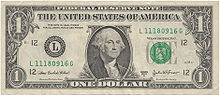
Image source: United States one-dollar bill. Wikipedia, public domain.

A licensed "doctor"

IMAG0394.jpg

IMAG0393.jpg

Automatic tracker ensures your doctor washed their hands


The University of Illinois Medical Center has installed a system called HyGreen (Hand Hygiene Recording and Reminding System) which acts as a reminder to health care workers before they ever enter a patient's room.

The provider begins by cleaning his hands, then placing them under a sensor that recognizes the cleaning, and transmits a signal to a badge the provider is wearing. When they walk into the patient's room, that badge transmits an "all clean" signal to a sensor above the bed.

If a caregiver walks into a room without washing their hands, the sensor won't get that all clean signal and the badge will start buzzing.


References:
Tech Ensures Your Doc Washed Their Hands. NBC Chicago.

The Singing Doctor


From Cleveland Clinic YouTube chanel: Who knew doctors can sign? Hear the ENT doctor Paul Bryson sing the National Anthem sing at an Indians Game (Cleveland baseball team).

Comments from Twitter:

@scanman Wow!! Great voice!!

@DrSnit this was a lovely singing voice.

@faisal_q Working talent @ClevelandClinic

@gastromom Ruled out GERD ;)
100-year-old doctor still practicing at UCSF, shares unconventional
longevity secrets

100-year-old doctor still practicing at UCSF, shares unconventional longevity secrets

Even though he recently turned 100, Dr. Ephraim Engleman still sees arthritis patients regularly at the University of California San Francisco (UCSF). He has some rather unconventional longevity secrets to share:

"I think exercise is mostly overrated. And the use of vitamins, forget it. And I don't encourage a lot of doctors.

Fall in love and get married. Sex is to be encouraged. Children are a priority."

His two sons are physicians. His daugher, a lawyer, is a married to a doctor, and their son is a physician.

From NBC’s Nightly News:

Visit msnbc.com for breaking news, world news, and news about the economy


The extended 17-minute version of the report is embedded below:

Visit msnbc.com for breaking news, world news, and news about the economy


Comments from Twitter:

@theRealAnubis: Hum...If he was right, 1/2 of the world population would reach 100 yrs.... For what I see about his case, money is the biggest ally..