Showing posts with label Effective. Show all posts
DRACO drug effective against most viruses (Double-stranded RNA
Activated Caspase Oligomerizer)

DRACO drug effective against most viruses (Double-stranded RNA Activated Caspase Oligomerizer)

"New drug could cure nearly any viral infection", proclaimed the media. The drug works by targeting a type of RNA (dsRNA) produced only in cells that have been infected by viruses. “In theory, it should work against all viruses."

Currently there are relatively few antiviral therapeutics, and most which do exist are highly pathogen-specific.

The MIT researchers developed a new broad-spectrum antiviral approach, called Double-stranded RNA (dsRNA) Activated Caspase Oligomerizer (DRACO).

DRACO selectively induces apoptosis in cells containing viral dsRNA, rapidly killing infected cells without harming uninfected cells.

The drugs were nontoxic to mammalian cells and effective against 15 different viruses, including dengue flavivirus, arenaviruses, bunyavirus, and H1N1 influenza. Dengue fever has invaded Florida and there are no effective antiviral agents to treat dengue infection at this time, according to a recent NEJM review (http://goo.gl/0gEXH).

DRACOs have the potential to be effective therapeutics or prophylactics for numerous clinical and priority viruses, due to:

- broad-spectrum sensitivity of the dsRNA detection domain
- potent activity of the apoptosis induction domain


NPR Video: How a Flu Virus Invades Your Body: "It starts very simply. A virus, just one, latches on to one of your cells and fools that cell into making lots more. Lots, lots more, like a million new viruses. This animation shows you how viruses trick healthy cells to join the dark side".

References:

New drug could cure nearly any viral infection. MIT News.

Rider TH, Zook CE, Boettcher TL, Wick ST, Pancoast JS, et al. (2011) Broad-Spectrum Antiviral Therapeutics. PLoS ONE 6(7): e22572. doi:10.1371/journal.pone.0022572

Depression treatment is as effective in older (over 65) as in younger adults

Depression in later life, traditionally defined as age older than 65, is associated with disability, increased mortality, and poorer outcomes.

Compared to younger adults with depression:

- cognitive and functional impairment and anxiety are more common in older adults

- older adults with depression are at increased risk of suicide

Depression is associated with cognitive impairment and an increased risk of dementia.

A selective serotonin reuptake inhibitor (SSRI) should be the first line pharmacological treatment for depression for most older adults.

Psychological and drug treatment is as effective in older as in younger adults

References:

Depression in older adults. Rodda et al. BMJ, 2011.

Image source: Vincent van Gogh's 1890 painting At Eternity's Gate. Wikipedia, public domain.
Evaluation of suspected dementia: 2-visit approach is effective

Evaluation of suspected dementia: 2-visit approach is effective

Prevalence of dementia will increase as the U.S. and the world population ages. The text below is based on a recent review in the journal Am Fam Physician:

Risk factors for dementia include:

- age
- family history of dementia
- apolipoprotein E4 genotype
- cardiovascular comorbidities
- chronic anticholinergic use
- lower educational level

A two-visit approach is time-effective for primary care physicians.

During the first visit, the physician should administer a screening test such as:

- verbal fluency test
- Mini-Cognitive Assessment Instrument
- Sweet 16

The tests above have relatively high sensitivity and specificity for detecting dementia, and can be completed in as little as 60 seconds (Note by editor: this one-minute time estimate sounds too optimistic, it usually takes considerably longer).

If the screening test result is abnormal or another disease is suspected, laboratory and imaging tests should be ordered, and the patient should return for additional cognitive testing.

A second visit should include:

- Mini-Mental State Examination
- Geriatric Depression Scale
- verbal fluency
- clock drawing tests

For patients with dementia, the following characteristics are useful for identifying
patients at increased risk for unsafe driving:

- Clinical Dementia Rating scale (Level A)
- caregiver’s rating of a patient’s driving ability as marginal or unsafe (Level B)
- history of crashes or traffic citations (Level C)
- reduced driving mileage or self-reported situational avoidance (Level C)
- Mini-Mental State Examination scores of 24 or less (Level C)
- aggressive or impulsive personality characteristics (Level C)


Evaluation of driving risk in dementia (click to enlarge the image).

References:

Evaluation of suspected dementia. Simmons BB, Hartmann B, Dejoseph D. Am Fam Physician. 2011 Oct 15;84(8):895-902.

Depression affects up to 9% of U.S. population - how to do effective screening?

From American Family Physician:

Depression affects up to 9% of U.S. population.

The U.S. Preventive Services Task Force recommends screening in adolescents and adults but it does not recommend screening for depression in children 7-11 years of age, or screening for suicide risk in the general population.

The Patient Health Questionnaire (PHQ)-2 and PHQ-9 are commonly used and validated screening tools.

The PHQ-2 has a 97% sensitivity and 67% specificity in adults. The PHQ-2 inquires about the frequency of depressed mood and anhedonia over the past 2 weeks, scoring each as 0 ("not at all") to 3 ("nearly every day").

PHQ-9 has a 61% sensitivity and 94% specificity in adults. The PHQ-9 depression module scores each of the 9 DSM-IV criteria as “0” (not at all) to “3” (nearly every day).

If the PHQ-2 is positive for depression, the PHQ-9 should be administered.

In older adults, the 15-item Geriatric Depression Scale is an appropriate follow-up test.

If these screening tests are positive for depression, further evaluation is needed to confirm that the patient's symptoms meet the Diagnostic and Statistical Manual of Mental Disorders' (DSM) criteria for diagnosis.

Suicide is second to only accidental death as the leading cause of mortality in young men across the world. High-lethality methods of suicide are preferred by young men: hanging and firearms in high-income countries, pesticide poisoning in the Indian subcontinent, and charcoal-burning in east Asia (Lancet, 2012).

References:

Screening for depression. Maurer DM. Am Fam Physician. 2012 Jan 15;85(2):139-44.

Image source: Vincent van Gogh's 1890 painting At Eternity's Gate. Wikipedia, public domain.

Oral fingolimod more effective than intramuscular interferon in relapsing–remitting multiple sclerosis

Oral fingolimod is a sphingosine-1-phosphate–receptor modulator that prevents the egress of lymphocytes from lymph nodes.

In patients with relapsing–remitting multiple sclerosis, oral fingolimod was more effective than intramuscular interferon beta-1a in reducing relapse rates.

Adverse events in the fingolimod group included:

- herpesvirus infections (two fatal infections)
- atrioventricular block
- macular edema
- skin cancer
- liver-enzyme elevation

This trial showed the superior efficacy of oral fingolimod with respect to relapse rates and MRI outcomes in patients with multiple sclerosis, as compared with intramuscular interferon beta-1a.

Multiple Sclerosis Overview - Mayo Clinic YouTube http://bit.ly/181FCi4


References:

Oral Fingolimod or Intramuscular Interferon for Relapsing Multiple Sclerosis. NEJM, 2010.
http://content.nejm.org/cgi/content/short/362/5/402
A Placebo-Controlled Trial of Oral Fingolimod in Relapsing Multiple Sclerosis. NEJM, 2010.
http://content.nejm.org/cgi/content/short/362/5/387
A Placebo-Controlled Trial of Oral Cladribine for Relapsing Multiple Sclerosis. NEJM, 2010.
http://content.nejm.org/cgi/content/short/362/5/416
Image source: Fingolimod, Wikipedia, public domain.
Newer airbags less effective in protecting drivers than older airbags?

Newer airbags less effective in protecting drivers than older airbags?


Video. CNN.com

Oral Tolvaptan (Samsca) Is Safe and Effective Treatment for Chronic Hyponatremia

Vasopressin antagonists increase the serum sodium concentration in patients who have euvolemia and hypervolemia with hyponatremia in the short term (30 days), but their safety and efficacy with longer term administration is unknown.

In a study, 111 patients with hyponatremia received oral tolvaptan (Samsca) for 700 days.

The most common adverse effects attributed to tolvaptan were pollakiuria, thirst, fatigue, dry mouth, polydipsia, and polyuria.

Mean serum sodium increased from 130.8 mmol/L at baseline to greater than 135 mmol/L throughout the observation period.

Responses were comparable between patients with euvolemia and those with heart failure but more modest in patients with cirrhosis.

In conclusion, prolonged administration of tolvaptan maintains an increased serum sodium with an acceptable margin of safety.

Samsca (tolvaptan) Black Box Warnings

Appropriate Use

Initiate and re-initiate tx only in hospital with serum Na monitoring.

Monitor Serum Sodium

Osmotic demyelination may occur w/ rapid correction of hyponatremia (faster than 12 mEq/L/24h), resulting in dysarthria, mutism, dysphagia, lethargy, affective changes, spastic quadriparesis, seizures, coma, and death; slower rates of correction advised in pts w/ severe malnutrition, alcoholism or advanced liver disease.

Cost comparison of conivaptan (Vaprisol) versus tolvaptan (Samsca)

Conivaptan is administered IV only, the average cost per day is $573.

Tolvaptan is administered PO only, the average cost per day is $300.

References:

Oral Tolvaptan Is Safe and Effective in Chronic Hyponatremia. Journal of the American Society of Nephrology, 2010.
Lowest sodium I have ever seen http://goo.gl/QgJmf
Image source: Tolvaptan, Wikipedia, public domain.

Comments from Twitter and Facebook:

@kidney_boy: tolvaptan is safe for the patient but not their wallet at $250 per pill!

Neil Mehta: "It costs a king's ransom to keep the sodium level up! Maybe we should just say "Let them eat Salt"!"

Updated: 10/28/2010

Oral factor Xa inhibitor apixaban - more effective than enoxaparin for thromboprophylaxis after knee replacement

Low-molecular-weight heparins such as enoxaparin are preferred for prevention of venous thromboembolism after major joint replacement. Apixaban, an orally active factor Xa inhibitor, might be as effective, have lower bleeding risk, and be easier to use than is enoxaparin.

The primary outcome in this Lancet study was the composite of asymptomatic and symptomatic deep vein thrombosis (DVT), non-fatal pulmonary embolism (PE), and all-cause death during treatment. The primary outcome was reported in 15% of apixaban patients and 24% of enoxaparin patients (relative risk 0·62), absolute risk reduction 9·3%.

Major or clinically relevant non-major bleeding occurred in 4% of patients receiving apixaban and 5% of treated with enoxaparin.

The authors concluded that apixaban 2·5 mg twice daily, starting on the morning after total knee replacement, offers a convenient and more effective orally administered alternative to 40 mg per day enoxaparin, without increased bleeding.

References:
Image source: Apixaban, Wikipedia, public domain.

Stelara (ustekinumab) and Remicade (infliximab) are effective if Enbrel (etanercept) stops working in psoriasis

About 7.5 million Americans suffer from psoriasis, a lifelong disorder characterized by inflammation of skin and, often, the joints.

Stelara, Remicade, and Enbrel are all biologics -- drugs made of genetically engineered proteins -- that are generally used to treat patients who aren't responding to traditional therapies such as light therapy and methotrexate.

Remicade and Enbrel both block tumor necrosis factor-alpha (TNF-alpha), a chemical produced by immune cells that fuels inflammation, much like gas on a fire. Stelara targets two proteins, interleukin 12 and interleukin 23, that also drive the inflammatory process.

References:
Study Shows Stelara and Remicade Are Both Effective if Enbrel Stops Working. WebMD, 2010.
Ustekinumab is a Strong Option for Moderate to Severe Psoriasis - anti-IL12/23 monoclonal antibody with NNT of 2 http://goo.gl/gbXSJ
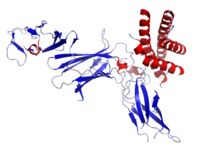
Image source: Crystal structure of human IL-12, Wikipedia, public domain.

Vedolizumab (anti-integrin) is effective for treatment of ulcerative colitis and Crohn's disease

The integrin superfamily consists of 30 proteins that promote cell-cell or cell-matrix interactions. The name integrins derives from the idea that they coordinate (i.e., "integrate") signals.

All integrins are cell surface proteins composed of 2 polypeptide chains, α and β. Integrins are classified into several subfamilies based on the β chains.


Lymphocyte Trafficking. This video describes how lymphocytes travel through the blood stream and into a lymph node. This video is from: Janeway's Immunobiology, 7th Edition, Murphy, Travers, & Walport. Source: Garland Science.

7 Integrin, a cell adhesion molecule, is present in the form of α4β7 integrin or αEβ7 integrin. α4β7 Integrin is expressed on most leucocytes and is essential for their migration to gut-associated lymphoid tissues by interacting with its primary ligand, mucosal addressin cell adhesion molecule-1, which is preferentially expressed in gut-associated lymphoid tissues.

Vedolizumab is a monoclonal antibody being developed by a subsidiary of Takeda Pharmaceuticals for the treatment of ulcerative colitis and Crohn's disease. It binds to integrin α4β7 (LPAM-1, lymphocyte Peyer's patch adhesion molecule 1). Blocking the α4β7 integrin results in gut-selective anti-inflammatory activity by blockade of lymphocyte trafficking.

Sunanda Kane, M.D., a gastroenterologist at Mayo Clinic specializing in the care and evaluation of patients with IBD, discusses two articles recently published in NEJM that found patients with ulcerative colitis or Crohn's disease benefited from treatment with vedolizumab compared with placebo. She discusses how vedolizumab is different than other drugs currently used to treat IBD.


Recruitment of Leukocytes to Sites of Infection can be remembered by the mnemonic: "SIP of wine":

S
electins
Integrins
Penetration of of the basement membrane (BM) by PMN

Selectins are first in the chain of events. They upregulate TNF and IL-1. Integrins cause release of VCAM and VLA.

Adhesion molecules, 3 groups are remembered by the mnemonic SIS:

S
electins
Integrins
Superfamily Ig

References:

http://www.ncbi.nlm.nih.gov/pubmed/21047673
http://www.nejm.org/doi/full/10.1056/NEJMe1307415
http://www.nejm.org/doi/full/10.1056/NEJMoa1215739
http://www.nejm.org/doi/full/10.1056/NEJMoa1215734

New Treatment Effective in Killing Head Lice - benzyl alcohol lotion 5% (Ulesfia)

From WebMD:

A new prescription lotion (Ulesfia) with benzyl alcohol treats head lice and is effective and safe for children as young as 6 months. The study shows it works by suffocating lice, a method that has long been tried with limited success using messy substances like petroleum jelly, olive oil, and even mayonnaise.

Overnight "home remedies" such as mayonnaise merely appear to kill lice, but don't because the bugs are able to close their spiracles long enough to survive. This is called the "resurrection effect" because, after rinsing, the lice thought to be dead are able to open their breathing spiracles and start biting again.

Existing over-the-counter head lice treatments contain neurotoxic pesticides as active ingredients, resulting in potential toxicity and other problems, including lengthy applications, odor and ineffectiveness.

References:
Losing the Lice Without Losing Your Wallet. NYTimes, 2010.
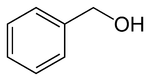
Image source: Benzyl alcohol, Wikipedia, public domain.

Updated: 05/28/2010