
Showing posts with label associated. Show all posts
Chocolate consumption is inversely associated with coronary heart
disease

Chocolate consumption is inversely associated with coronary heart disease

Cocoa and dark chocolate are rich in flavonoids and may lower blood pressure.

5,000 people aged 25-93 years participated in the National Heart, Lung, and Blood Institute (NHLBI) Family Heart Study.

Compared to subjects who did not report any chocolate intake, odds ratios for coronary heart disease (CHD) were:

- 1.0 for subjects consuming chocolate 1-3 times/month
- 0.74 for subjects consuming chocolate 1-4 times/week
- 0.43 for subjects consuming chocolate 5+ times/week

Consumption of non-chocolate candy was associated with a 49% higher prevalence of CHD comparing 5+/week vs. none per week [OR = 1.49].

Consumption of chocolate is inversely related with prevalent CHD in a general United States population.

References:

Chocolate consumption is inversely associated with prevalent coronary heart disease: the National Heart, Lung, and Blood Institute Family Heart Study. Djoussé L, Hopkins PN, North KE, Pankow JS, Arnett DK, Ellison RC. Clin Nutr. 2011 Apr;30(2):182-7. Epub 2010 Sep 19.
Image source: Wikipedia, public domain.

From Writer's Almanac:

Ode to Chocolate by Barbara Crooker (excerpt)

I hate milk chocolate, don't want clouds
of cream diluting the dark night sky,
don't want pralines or raisins, rubble
in this smooth plateau. I like my coffee
black, my beer from Germany, wine
from Burgundy, the darker, the better.
Unfaithfulness in men may be associated with higher risk of
cardiovascular events

Unfaithfulness in men may be associated with higher risk of cardiovascular events

The authors of this study from Italy performed an extensive Medline search for “unfaithfulness,”“extramarital affairs,”“infidelity,” and “men.”

How common is unfaithfulness in men?

As expected the results were variable. Some surveys reported that 1.5–4% of married men had extramarital coitus in any given year, others that 23.2% of men have cheated during their current relationship.

Lifetime prevalence of unfaithfulness was between 15% and 50%.

What are the factors related to unfaithfulness?

Men with extramarital affairs more frequently have a dysfunctional primary relationship.

Parenthood and conflicts within the family are associated with a higher risk of having an affair.

Unfaithful men display a higher androgenization, larger testis volume, higher sexual desire, and better sexual functioning.

What are the clinical implications of unfaithfulness in men?

Some studies have suggested that having an extramarital affair could have a negative impact on cardiac morbidity and mortality. Unfaithfulness in men seems to be associated with a higher risk of major cardiovascular events.

References

Fisher AD, Bandini E, Rastrelli G, Corona G, Monami M, Mannucci E, and Maggi M. Sexual and cardiovascular correlates of male unfaithfulness. J Sex Med, 2012.

Image source: OpenClipart.org, public domain.
C-reactive protein (CRP) associated with risk of coronary heart
disease, stroke, vascular mortality, and death from several cancers and
lung disease

C-reactive protein (CRP) associated with risk of coronary heart disease, stroke, vascular mortality, and death from several cancers and lung disease

Associations of C-reactive protein (CRP) concentration with risk of major diseases can best be assessed by long-term prospective follow-up of large numbers of people.

This Lancet meta-analysis included records of 160,309 people without a history of vascular disease from 54 long-term prospective studies.

Risk ratios (RRs) were 1·23 for coronary heart disease; 1·32 for ischaemic stroke; 1·34 for vascular mortality; and 1·34 for non-vascular mortality.

CRP concentration has continuous associations with the risk of:

- coronary heart disease
- ischaemic stroke
- vascular mortality
- death from several cancers and lung disease

The relevance of CRP to such a range of disorders is unclear. Associations with ischaemic vascular disease depend considerably on conventional risk factors and other markers of inflammation.

Is is still a topic of debate is whether CRP has a causal role in the development of cardiovascular disease.

However, even if CRP might not be involved in the causal pathway of atherogenesis and plaque rupture, it may still be a valuable tool in cardiovascular medicine.

In primary prevention, lovastatin therapy was more cost effective in people with increased CRP concentrations.

The JUPITER trial recently showed that, in people with relatively normal LDL cholesterol concentrations and CRP higher than 2 mg/L, rosuvastatin reduced cardiovascular risk. Even if CRP turns out to be not directly causal in cardiovascular disease, it might be useful to identify individuals at cardiovascular risk and to evaluate the efficacy of our preventing and therapeutic interventions.

References:
C-reactive protein concentration and risk of coronary heart disease, stroke, and mortality: an individual participant meta-analysis. The Lancet, Volume 375, Issue 9709, Pages 132 - 140, 9 January 2010.
C-reactive protein and cardiovascular risk: more fuel to the fire. S Matthijs Boekholdt a b, John JP Kastelein b. The Lancet, Volume 375, Issue 9709, Pages 95 - 96, 9 January 2010.
C reactive protein concentration itself is unlikely to be even a modest causal factor in coronary heart disease - BMJ, 2011. http://goo.gl/d5lCH
Image source: C-reactive protein. Wikipedia, GNU Free Documentation License.

Low vitamin D levels in children associated with higher plasma glucose and lower HDL

Vitamin D is a steroid hormone and a component of a complex endocrine pathway sometimes called 'vitamin D endocrine system' (Medscape, 2012).  A retrospective record review of pediatric outpatients (age, 2-18 years) included simultaneous measurement of 25-hydroxyvitamin D (25[OH] D) and fasting plasma glucose or 25(OH) D and a lipid panel.

25(OH) D levels were inversely correlated with fasting plasma glucose levels.

Lower 25(OH) D levels were also associated with lower serum high-density lipoprotein cholesterol (HDL) concentrations.

Children who were vitamin D insufficient (25[OH] D ≤30 ng/mL) had higher fasting plasma glucose and lower HDL levels than children who were vitamin D sufficient (25[OH] D >30 ng/mL).

Monounsaturated fats found in vegetable oils, nuts and avocados increase "good" HDL cholesterol levels by 12% http://goo.gl/GBQa5
Image sources: Wikipedia, public domain.

Emphysema and Airflow Obstruction Associated with Impaired Left Ventricular Filling

Very severe chronic obstructive pulmonary disease (COPD) causes cor pulmonale - elevated pulmonary vascular resistance and secondary reductions in left ventricular filling, stroke volume, and cardiac output.

The authors of this NEJM study hypothesized that emphysema, as detected on computed tomography (CT), and airflow obstruction are inversely related to left ventricular end-diastolic volume, stroke volume, and cardiac output among persons without very severe lung disease.

Of the study participants, 13% were current smokers, 38% were former smokers, and 49% had never smoked.

A 10% increase in emphysema on CT was related to decrease in left ventricular end-diastolic volume, stroke volume, and cardiac output.

Percent emphysema and airflow obstruction were not associated with the left ventricular ejection fraction (LVEF).


Mind map of Chronic Obstructive Pulmonary Disease (COPD) (click to enlarge the image).

References:
Percent Emphysema, Airflow Obstruction, and Impaired Left Ventricular Filling. R. Graham Barr et al. NEJM Volume 362:217-227 January 21, 2010 Number 3.
Eradication of nasal colonization with S. aureus associated with a
decrease in postoperative surgical-site infections

Eradication of nasal colonization with S. aureus associated with a decrease in postoperative surgical-site infections

Nasal carriers of Staphylococcus aureus are at increased risk for health care–associated infections with this organism.

Eradication of colonization with S. aureus by screening at admission and subsequent decolonization (with intranasal mupirocin and chlorhexidine skin washes) were associated with a decrease in postoperative surgical-site infections.

In a randomized, double-blind, placebo-controlled trial, S. aureus nasal carriers were treated with mupirocin nasal ointment and chlorhexidine soap.

A total of 6771 patients were screened on admission, 1270 nasal swabs from 1251 patients were positive for S. aureus. All the S. aureus strains identified on PCR assay were susceptible to methicillin and mupirocin.

The rate of S. aureus infection was 3.4% in the mupirocin–chlorhexidine group, as compared with 7.7% in the placebo group (relative risk of infection, 0.42). The effect of mupirocin–chlorhexidine treatment was most pronounced for deep surgical-site infections (relative risk, 0.21).

References:
Preventing Surgical-Site Infections in Nasal Carriers of Staphylococcus aureus. NEJM, 1/2009.
GIANTmicrobes in Toys & Games section of Amazon.com http://goo.gl/gMrf

Childhood diabetes associated with increasing birth weight - 7% increase in risk for every 1000 g in weight

Childhood onset diabetes is associated with increasing birth weight, equivalent to a 7% increase in risk for every 1000 g in weight.

Caesarean section increases the risk by around 20%.

The risk of childhood onset diabetes increases with maternal age: 5% for each five years of age.

References:
Maternal age and diabetes in childhood. BMJ 2010;340:c623.
Image source: Wikipedia, GNU Free Documentation License.
Using the Internet for health purposes was associated with increased
depression

Using the Internet for health purposes was associated with increased depression

The rapid expansion of the Internet has increased the ease with which the public can obtain medical information. Most research on the utility of the Internet for health purposes has evaluated the quality of the information or examined its impact on clinical populations. Little is known about the consequences of its use by the general population.

Health-related Internet use was associated with small but reliable increases in depression (i.e., increasing use of the Internet for health purposes from 3 to 5 days per week to once a day was associated with 0.11 standard deviations more symptoms of depression, P = 0.002).

Using the Internet for health purposes was associated with increased depression. The increase may be due to increased rumination, unnecessary alarm, or over-attention to health problems.

In contrast, using the Internet to communicate with friends and family was associated with declines in depression.

References:
Negative consequences from the use of internet for health information - CDC (PDF) http://goo.gl/Fgcq via http://goo.gl/947F
Image source: Wikipedia, public domain.

Updated: 08/12/2010
Reduced workload and increased participation of attendings associated
with higher satisfaction of doctors in training

Reduced workload and increased participation of attendings associated with higher satisfaction of doctors in training

An experimental inpatient-medicine service was designed with reduced resident workload comprising two teams, with each team consisting of two attending physicians, two residents, and three interns.

Attending physicians, selected for their "teaching prowess", supervised the teams throughout the workday and during bedside team-teaching rounds.

This experimental model was compared with a control model comprising two teams, with each consisting of one resident and two interns, plus multiple supervising attending physicians who volunteered to participate.

Over a 12-month period, 1892 patients were assigned to the experimental teams and 2096 to the control teams; the average census per intern was 3.5 and 6.6 patients, respectively.

Overall satisfaction was significantly higher among trainees on the experimental teams than among those on the control teams (78% and 55%, respectively; P=0.002).

Interns on the experimental teams spent more time in learning and teaching activities than did interns on the control teams (learning: 20% of total time vs. 10%, P=0.01; teaching: 8% of total time vs. 2%, P=0.006).

A model with two attending physicians and limited patient-staff census resulted in greater satisfaction on the part of trainees and attending physicians than the standard approach.

Reduced trainee workload and increased participation of attending physicians was associated with higher trainee satisfaction and increased time for educational activities.

Image source: OpenClipArt.org, public domain.

10 risk factors are associated with 90% of the risk of stroke

The Lancet reported that in 3000 patients with stroke (78%, with ischaemic stroke; 22%, with intracerebral haemorrhagic stroke) and 3000 controls, significant risk factors for all types of stroke were:

- history of hypertension (OR 2·64)
- current smoking (2·09)
- waist-to-hip ratio (1·65)
- diet risk score (1·35)
- regular physical activity (0·69)
- diabetes mellitus (1·36)
- alcohol intake (1·51)
- psychosocial stress (1·30)
- depression (1·35)
- cardiac causes (2·38)
- ratio of apolipoproteins B to A1 (1·89)

Collectively, these risk factors accounted for 88·1% of the PAR for all strokes. When an alternate definition of hypertension was used (history of hypertension or blood pressure higher than 160/90 mm Hg), the combined PAR was 90·3% (85·3—93·7) for all stroke.

These risk factors were all significant for ischaemic stroke, whereas hypertension, smoking, waist-to-hip ratio, diet, and alcohol intake were significant risk factors for intracerebral haemorrhagic stroke.

Ten risk factors are associated with 90% of the risk of stroke. Targeted interventions that reduce blood pressure and smoking, and promote physical activity and a healthy diet, could substantially reduce the burden of stroke.

References:
Stroke Risk Calculator http://goo.gl/elmc
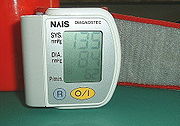
Image source: BP device used for measuring arterial pressure. Wikipedia, GNU Free Documentation License.

Participation in clean-up of oil spill associated with airway injury and chromosomal damage

In 2002, the oil tanker Prestige spilled more than 67 000 tons of bunker oil, heavily contaminating the coast of northwestern Spain. The study population included local fishermen who were highly exposed (n = 501) or not exposed (n = 177) to oil. They were evaluated 2 years after the spill.

Elevated markers of airway injury

Persons exposed to oil were at increased risk for lower respiratory tract symptoms (risk difference, 8.0). However, lung function did not significantly differ between the groups. Exposed participants also had higher levels of exhaled vascular endothelial growth factor (risk difference, 44.8) and basic fibroblast growth factor (risk difference, 16.0).

Human chromosomes (grey) capped by telomeres (white). Image source: Wikipedia, public domain.

Chromosomal damage

A higher proportion of exposed participants had structural chromosomal alterations (risk difference, 27.4), predominantly unbalanced alterations.

Participation in clean-up of a major oil spill was associated with persistent respiratory symptoms, elevated markers of airway injury in breath condensate, and chromosomal damage.

References:
Health Changes in Fishermen 2 Years After Clean-up of the Prestige Oil Spill. Ann Intern Med, October 19, 2010, vol. 153 no. 8 489-498.

Invasive dental treatment associated with increased risk for stroke and myocardial infarction

Treatment of periodontal disease may reduce cardiovascular risk in the longer term, but studies have suggested a link among dental procedures, acute inflammation, and endothelial dysfunction.

This study included persons exposed to invasive dental treatment with a primary hospital discharge diagnosis of ischemic stroke or myocardial infarction from 2002 to 2006.

The rate of vascular events significantly increased in the first 4 weeks after invasive dental treatment (incidence ratio, 1.50) and gradually returned to the baseline rate within 6 months.

Invasive dental treatment may be associated with a transient increase in the risk for vascular events. However, the absolute risks are minimal, and the long-term benefits on vascular health will probably outweigh the short-lived adverse effects.

References:Image source: Cross-section of a tooth with visible gums, or gingiva, Wikipedia, GNU Free Documentation License.