Showing posts with label linked. Show all posts
4 medication classes linked to 67% of drug-related hospitalizations

4 medication classes linked to 67% of drug-related hospitalizations

Adverse drug events are important preventable causes of hospitalization in older adults.

4 medications linked to 67% of drug-related hospitalizations

Four medications or medication classes were implicated alone or in combination in 67% of hospitalizations:

- warfarin, 33%
- insulins, 14%
- oral antiplatelet agents, 13%
- oral hypoglycemic agents, 11%

High-risk medications were implicated in only 1.2% of hospitalizations.

50% of these hospitalizations were among adults 80 years of age or older. 65% of hospitalizations were due to unintentional overdoses.

Classification of adverse reactions to drugs: "SOAP III" mnemonic (click to enlarge the image):


Adverse drug reactions (ADRs) affect 10–20% of hospitalized patients and 25% of outpatients.

Rule of 10s in ADR:

10% of patients develop ADR
10% of these are due to allergy
10% of these lead to anaphylaxis
10% of these lead to death

Insulin is one of the top 10 high risk medications

Insulin has been identified as one of the top 10 high risk medicines worldwide. Errors are common - the first national audit in England and Wales showed prescribing errors in 19.5% of cases.

Not only are mistakes common, they often lead to harm - 3% of medication errors are related to insulin, but these errors were also twice as likely to cause harm as errors for other prescribed drugs.

Over 20 different types of insulin are in use, in various strengths and forms, and with a range of delivery devices, including insulin syringes (from vials), insulin pens (prefilled or reusable), or infusion pumps.

Top 10 most prescribed medications

According to a report from the IMS Institute for Healthcare Informatics, the top 10 most-prescribed drugs in the U.S. are:

- hydrocodone (combined with acetaminophen)
- simvastatin
- lisinopril
- levothyroxine
- amlodipine
- omeprazole
- azithromycin
- amoxicillin
- metformin
- hydrochlorothiazide

References:

Emergency Hospitalizations for Adverse Drug Events in Older Americans. Daniel S. Budnitz, M.D., M.P.H., Maribeth C. Lovegrove, M.P.H., Nadine Shehab, Pharm.D., M.P.H., and Chesley L. Richards, M.D., M.P.H. N Engl J Med 2011; 365:2002-2012, November 24, 2011.
Insulin is one of the top 10 high risk medications worldwide for prescription errors
Top 10 Most Prescribed Medications
Drug Allergy: Introduction and Epidemiology
Drug Allergy
Image source: Wikipedia, public domain.

Comments from Google Plus and Twitter:

Wendy Hemken - I noticed that opioids weren't on that list. All the talk seems to be about how deadly they are. Is this not the case?

Aaron Sparshott @IVLINE: An important one for #medstudents
7 healthy traits linked to lower death risk but only 2% of people have
all 7 - are you one of them?

7 healthy traits linked to lower death risk but only 2% of people have all 7 - are you one of them?

People who meet the 7 healthy goals recommended by the American Heart Association are less likely to die of cardiovascular causes.

Here there are:

- not smoking
- moderate exercise at least 5 times a week
- untreated blood pressure under 120/80
- HbA1c under 5.7%
- total cholesterol under 200 mg/dL
- BMI less than 25
- a diet high in produce, fish, and whole grains, and low in sodium and sugary beverages

Less than 2% of people reached all 7 ideals.

Those who met 6-7 goals had reduced risks for all-cause mortality (hazard ratio, 0.49), compared with participants meeting zero or one goal.

References:

Healthy Habits Associated with Reduced Mortality Risk - Physician's First Watch http://bit.ly/N9x8ha
Trends in Cardiovascular Health Metrics and Associations With All-Cause and CVD Mortality Among US Adults - JAMA http://bit.ly/N9xzYO
Image source: OpenClipart.org, public domain.

Long term exposure to air pollution linked to coronary events - BMJ video

You can read the research study at the BMJ website: http://www.bmj.com/content/348/bmj.f7412


Throughout the world particulate air pollution is estimated to cause 3.1 million deaths a year and 22% of disability adjusted life years (DALY) due to ischaemic heart disease. Several cohort studies have reported that long term exposure to air pollution is associated with mortality, in particular cardiovascular mortality.

The ESCAPE Study (European Study of Cohorts for Air Pollution Effects) was conducted between 2008 and 2012 to quantify the associations between exposures and health outcomes. The study design included prospective cohort studies and meta-analysis of the results. The cohorts were in Finland, Sweden, Denmark, Germany, and Italy.

100,000 people were enrolled and followed for 11 years. Participants were free from previous coronary events at baseline.

A 5 μg/m3 increase in estimated annual mean PM2.5 was associated with a 13% increased risk of coronary events, and a 10 μg/m3 increase in estimated annual mean PM10 was associated with a 12% increased risk of coronary events.

Long term exposure to particulate matter is associated with incidence of coronary events.
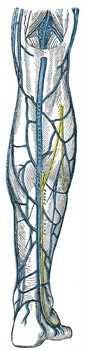
Superficial Venous Thrombosis Linked to Increased Risk of "Deep" Venous
Thromboembolism for Months

Superficial Venous Thrombosis Linked to Increased Risk of "Deep" Venous Thromboembolism for Months

Superficial venous thrombosis (SVT) is perceived to have a benign prognosis.

Among 844 patients with SVT, 24.9% also had deep venous thrombosis (DVT) or symptomatic pulmonary embolism.

Among 600 patients without DVT or pulmonary embolism at inclusion who were eligible for 3-month follow-up, 10.2% developed thromboembolic complications at 3 months despite 90.5% having received anticoagulants:

- pulmonary embolism 0.5%
- DVT 2.8%
- extension of SVT 3.3%
- recurrence of SVT 1.9%

A substantial number of patients with SVT exhibit venous thromboembolism at presentation, and some that do not can develop this complication in the subsequent 3 months.

References:
http://www.annals.org/content/152/4/218.short
Image source: Saphenous vein, Gray's Anatomy, 1918 (public domain).
Excessive Internet use may be linked to depression

Excessive Internet use may be linked to depression

Excessive Internet use may be linked to depression. Spend a day offline and connect with friends and family.

Twitter comment by @MiriamETucker: But they're all online!

Your Internet use could be telling you something about your mental health. If you keep up with friends via Facebook or spend more time chatting online with strangers than with family, it might be time to disconnect the computer for awhile — and check in with yourself.

The researchers analyzed internet use and depression levels of 1,319 Britons aged between 16 and 51. An online questionnaire was used to measure participants' Internet use, the functions for which they used the Internet, and their depressive tendencies. Of these, 1.2 percent were "internet addicted."

"Excessive internet use is associated with depression, but what we don't know is which comes first -- are depressed people drawn to the internet or does the internet cause depression?"

Using the Web to replace your usual social circle could be a red flag. Instead of spending hours on message boards, pick up the phone and call someone.

Twitter comments:

@BiteTheDust (Robbo) re: internet and depression.... if you skype someone is that using the phone or using the internet? just asking :)

@amacdt Especially if you use video skype - it's a tough one. I find that I really enjoy talking to people with video

References:
Image source: Wikipedia, public domain.
Stock market dips linked to heart attack increase

Stock market dips linked to heart attack increase

During the period of increased volatility in the stock market in 2006-2009, when stock market values decreased, heart attacks seemed to increase, and then decreased when stock trends improved.

While earlier studies showed a link between traumatic events such Hurricane Katrina in 2005 and an increased risk of "cardiac events," there was limited data on the impact of financial markets.

References:
Stock market dips linked to heart attack surge: study - Yahoo! News.
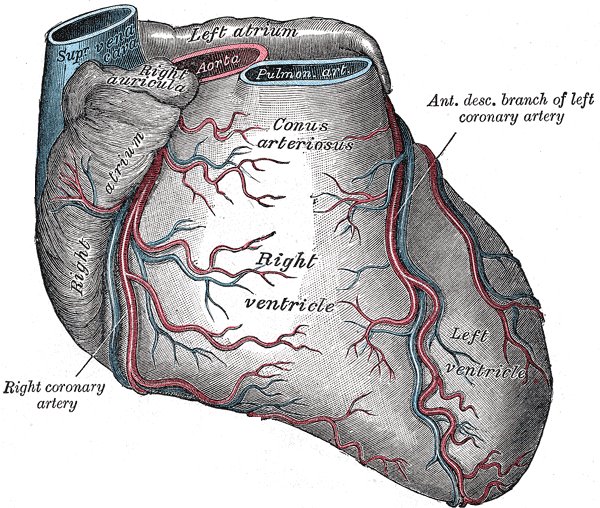
Image source: Gray's Anatomy, 1918, public domain.