Showing posts with label factor. Show all posts
The Diet Factor in Attention-Deficit/Hyperactivity Disorder -
State-of-the-Art Review Article in Pediatrics

The Diet Factor in Attention-Deficit/Hyperactivity Disorder - State-of-the-Art Review Article in Pediatrics

Diets that were tried in attempt to reduce symptoms associated with attention-deficit/hyperactivity disorder (ADHD) include:

- sugar-restricted
- additive/preservative-free
- oligoantigenic/elimination
- fatty acid supplements

Omega−3 supplement is the latest dietary treatment with positive reports of efficacy. Interest in the additive-free diet of the 1970s is occasionally revived.

Provocative reports have drawn attention to the ADHD-associated “Western-style” diet, high in fat and refined sugars, and the ADHD-free “healthy” diet, containing fiber, folate, and omega-3 fatty acids.

Indications for dietary therapy include:

- medication failure
- parental or patient preference
- iron deficiency
- change from an ADHD-linked Western diet to an ADHD-free healthy diet, when appropriate

In practice, additive-free and oligoantigenic/elimination diets are time-consuming and disruptive to the household; they are indicated only in selected patients.

Iron and zinc are supplemented in patients with known deficiencies; they may also enhance the effectiveness of stimulant therapy.

In patients failing to respond or with parents opposed to medication, omega-3 supplements may warrant a trial.

References:

The Diet Factor in Attention-Deficit/Hyperactivity Disorder. J. Gordon Millichap, MD and Michelle M. Yee, CPNP. PEDIATRICS Vol. 129 No. 2 February 1, 2012, pp. 330 -337, (doi: 10.1542/peds.2011-2199)

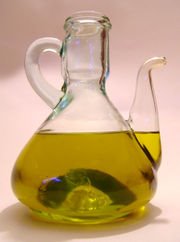
Image source: Olive oil, Wikipedia
Social relations as a primary factor for children’s happiness

Social relations as a primary factor for children’s happiness

The relation between the global happiness and school-related happiness of 700 12-year-old Finnish students was examined.

The results showed a strong relationship between happiness and social relationships.

The most popular choices of the happiness increasing factors were:

- success in school
- more free time
- success in a hobby

The least happy students more often than others wanted to have:

- more friends
- better looks
- more money
- a peaceful family life

The results confirm safe social relations as a primary factor underlying children’s happiness.

References:

Global and School-Related Happiness in Finnish Children. JOURNAL OF HAPPINESS STUDIES, 2011.

Comments from Google Plus:

Howard Luks - Our children's lives are far too structured and planned. We have a neighborhood full of young children, yet we are the only ones outside playing. Others are being shuttled to this and that, etc... sad. Let them learn, let them explore, let them socialize and start to cultivate the skills that will last them a lifetime... all IMHO +Wendy Sue Swanson thoughts?

Ves Dimov - Let kids be kids: unstructured play time may be more important than homework

http://casesblog.blogspot.com/2010/03/let-kids-be-kids-unstructured-play-time.html

Howard Luks - Couldn't agree more. Love how you find your links so fast :-)

Ves Dimov - My blog is my searchable archive... And the word "unstructured" rang a bell... :)

Wendy Sue Swanson - I like this thinking. I like the freedom to imagine that children will have space to remain present in their moments, that they'll consider the future without boundaries like they can when roaming in the yard. The structured and planned is becoming a norm---but there is resistance and more and more, parents are thinking about leaving their kids to the space and time they were afforded. With all of the parenting advice that is ever-present, it's hard for some parents to turn it off and tune back into their instincts. When you hear about the necessities of children learning 3 languages before age 7 (because the brain is primed until that age, thereafter it's far more difficult) it's hard not to jump in the car to the language school. This is the curse of more and more research--we get misdirected. We feel we can "perfect parenting." We forget we need time to stare up at the sky...time in the backyard with our hands in the sand and our brother at our side. We need to be able to remember that when life is still and we reflect on what matters, it's unlikely to be the language lesson.
Occupation may be a key factor in lung cancer

Occupation may be a key factor in lung cancer

While cigarettes are by far the most important cause of lung cancer, chemicals and other on-the-job hazards "play a remarkable role" in lung cancer risk.

5% of lung cancers in men are job-related. Men in the known to be risky occupations were 74% more likely to have been diagnosed with lung cancer.

The strongest associations were seen for ceramic and pottery jobs and brick manufacturing, as well as for those working in manufacturing of non-iron metals.

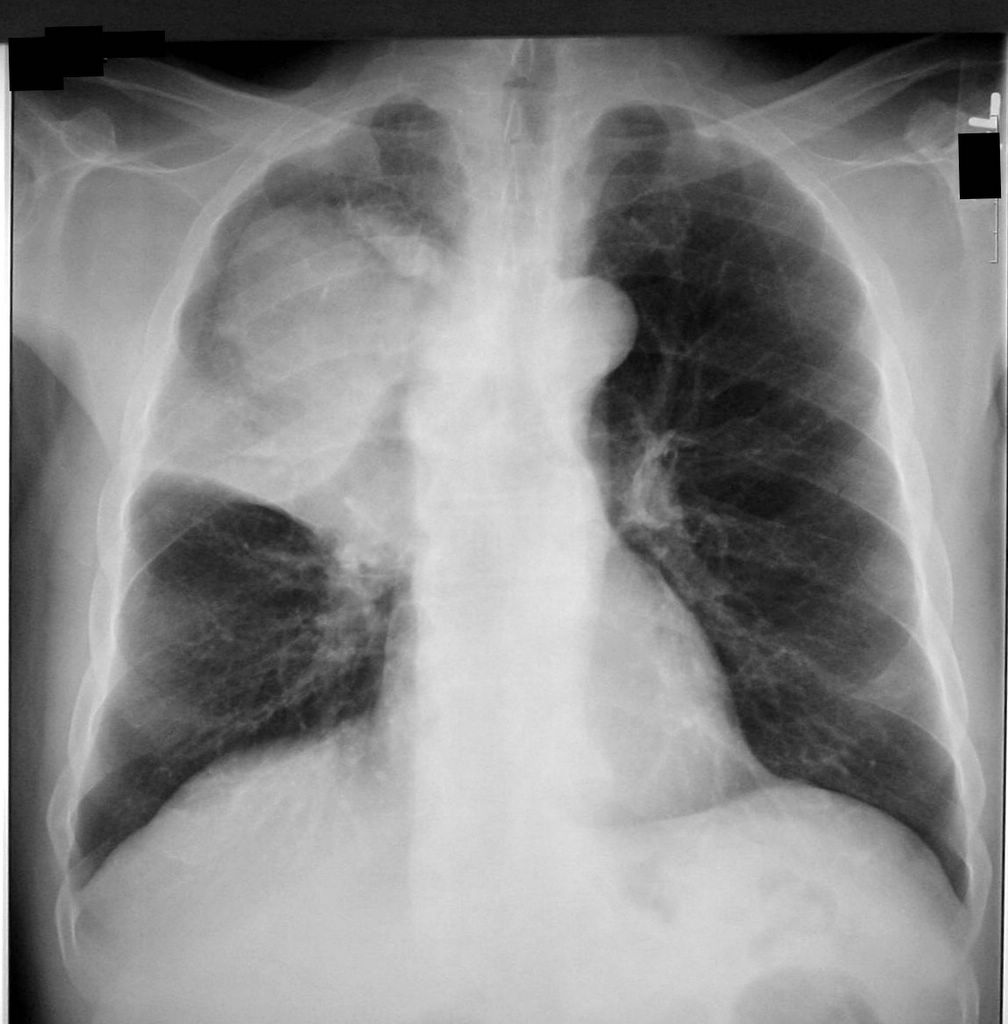
A CXR shows a right upper lobe (RUL) mass due to lung cancer. Source: Finger Clubbing due to Lung Cancer. Clinical Cases and Images.

References:
Occupation a key factor in men's lung cancer risk. Reuters, 2010.
http://www.reuters.com/article/idUSTRE61E53920100215

Oral factor Xa inhibitor apixaban - more effective than enoxaparin for thromboprophylaxis after knee replacement

Low-molecular-weight heparins such as enoxaparin are preferred for prevention of venous thromboembolism after major joint replacement. Apixaban, an orally active factor Xa inhibitor, might be as effective, have lower bleeding risk, and be easier to use than is enoxaparin.

The primary outcome in this Lancet study was the composite of asymptomatic and symptomatic deep vein thrombosis (DVT), non-fatal pulmonary embolism (PE), and all-cause death during treatment. The primary outcome was reported in 15% of apixaban patients and 24% of enoxaparin patients (relative risk 0·62), absolute risk reduction 9·3%.

Major or clinically relevant non-major bleeding occurred in 4% of patients receiving apixaban and 5% of treated with enoxaparin.

The authors concluded that apixaban 2·5 mg twice daily, starting on the morning after total knee replacement, offers a convenient and more effective orally administered alternative to 40 mg per day enoxaparin, without increased bleeding.

References:
Image source: Apixaban, Wikipedia, public domain.