Showing posts with label clinical. Show all posts

Clinical Pearls in Gastroenterology from Mayo Clinic (video)

The social media department of Mayo Clinic combines journal articles and videos by the lead authors. This is a useful approach that should be followed by other journals, in addition to Mayo's own journal, Clinic Proceedings.


Dr. Amy Oxentenko, Assistant Professor of Medicine at Mayo Clinic, discusses "Clinical Pearls in Gastroenterology" (article abstract). Here is the 2009 edition of the same project.

References:

Clinical Pearls in Gastroenterology 2011. Amy S. Oxentenko, MD, John B. Bundrick, MD, and Scott C. Litin, MD

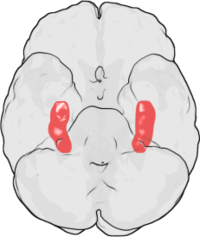
Memory loss - clinical focus on practical neurology

Memory loss - clinical focus on practical neurology

These are excerpts from a review in the Medical Journal of Australia (MJA):

Older people with mild cognitive impairment are at increased risk of progressing to dementia, but no tests are helpful in assessing this risk. Medications are not beneficial in mild cognitive impairment.

Physical activity and treatment of hypertension decrease the risk of dementia.

In people with Alzheimer’s disease, a cholinesterase inhibitor or memantine (an N-methyl- D-aspartate receptor antagonist) provides symptomatic relief. Medications do not change progression of the illness.

Behavioural and psychological symptoms are common in Alzheimer’s disease.

Atypical antipsychotics reduce agitation and psychosis but increase the risk of cardiovascular events.

Antidepressant role in managing depression with mild cognitive impairment is uncertain but they may increase the risk of delirium and falls.

References:

Memory loss. Leon A Flicker, Andrew H Ford, Christopher D Beer and Osvaldo P Almeida. Med J Aust 2012; 196 (2): 114-117.

Image source: Hippocampus, from Wikipedia, public domain.
GE Has Clinical IMAGES iPhone App for Radiologists

GE Has Clinical IMAGES iPhone App for Radiologists

Clinical IMAGES from GE Healthcare showcases clinical images obtained from GE Healthcare imaging systems. You can choose a product and browse by anatomy or by applications specific to the selected system. The application contains both static images and video of various image acquisitions.


References:
GE Healthcare Releases Clinical IMAGES iPhone App for Radiologists
Clinical IMAGES for iPhone, iPod touch, and iPad
How does clinical evidence work?

How does clinical evidence work?


Ben Goldacre's Moment of Genius on BBC4 radio:

"Clinical trials in medicine are designed to be free from bias. They test, as objectively as possible, the effectiveness of a particular intervention.

When you bring the results of all these individual trials together, however, how do you weigh up what evidence is relevant and what is not? In 1993, a method of "systematic review" was introduced that enables us to get the clearest possible view of the evidence."
Clinical Pearls in Men's Health - Mayo Clinic Proceedings Video

Clinical Pearls in Men's Health - Mayo Clinic Proceedings Video


Dr. Thomas Beckman discusses his July 2010 Mayo Clinic Proceedings concise review on 3 cases involving men's health.
"Professional Guinea Pigs" in Clinical Trials - TIME video

"Professional Guinea Pigs" in Clinical Trials - TIME video


Human subjects are paid in Phase 1 clinical trials to test the toxicity levels of new drugs. Some make a profession out of it, but researchers worry about health risks.

References:
Clinical Trials: Professional Guinea Pigs. TIME.
Steve Jobs on medical leave - transplantation specialist discusses two
likely clinical scenarios

Steve Jobs on medical leave - transplantation specialist discusses two likely clinical scenarios

From the WSJ:

William Chapman, transplantation chief at Washington University in St. Louis, hasn't examined Mr. Jobs personally, but said there are two likely scenarios in the CEO's case.

The first is that there was a transplant-related problem, though it would be unusual for that to happen a year and a half after the transplant.

A more likely possibility would be that the neuroendocrine tumor metastasized again. "It's really difficult to cure the disease with a liver transplant," said Mr. Chapman, adding that it's common to have some degree of recurrence. "Most people hope they reset the clock, gained some time and gained a quality of life even if you don't cure the disease."


Steve Jobs' speech at the 2005 Stanford graduation ceremony: “This is the closest I’ve ever gotten to a college graduation.”

He tells 3 stories from his life:

- Connecting the dots
- Love and loss
- About death

Mr. Jobs was diagnosed in 2004 with a rare type of pancreatic cancer called islet cell neuroendocrine tumor, which could be cured if surgery removed it promptly. He reportedly had surgery by the end of 2004 but began exhibiting weight loss in 2008. This type of cancer often metastasizes in another organ, usually the liver, during a patient's lifetime. A Tennessee hospital disclosed that Mr. Jobs had received a liver transplant there in 2009.

"Remembering that you are going to die is the best way I know to avoid the trap of thinking you have something to lose," Mr. Jobs said in the commence speech in June 2005, almost a year after he was diagnosed with pancreatic cancer.

I join everybody around the world in wishing Mr. Jobs a speedy recovery.

References: