
Showing posts with label Decrease. Show all posts
Eradication of nasal colonization with S. aureus associated with a
decrease in postoperative surgical-site infections

Eradication of nasal colonization with S. aureus associated with a decrease in postoperative surgical-site infections

Nasal carriers of Staphylococcus aureus are at increased risk for health care–associated infections with this organism.

Eradication of colonization with S. aureus by screening at admission and subsequent decolonization (with intranasal mupirocin and chlorhexidine skin washes) were associated with a decrease in postoperative surgical-site infections.

In a randomized, double-blind, placebo-controlled trial, S. aureus nasal carriers were treated with mupirocin nasal ointment and chlorhexidine soap.

A total of 6771 patients were screened on admission, 1270 nasal swabs from 1251 patients were positive for S. aureus. All the S. aureus strains identified on PCR assay were susceptible to methicillin and mupirocin.

The rate of S. aureus infection was 3.4% in the mupirocin–chlorhexidine group, as compared with 7.7% in the placebo group (relative risk of infection, 0.42). The effect of mupirocin–chlorhexidine treatment was most pronounced for deep surgical-site infections (relative risk, 0.21).

References:
Preventing Surgical-Site Infections in Nasal Carriers of Staphylococcus aureus. NEJM, 1/2009.
GIANTmicrobes in Toys & Games section of Amazon.com http://goo.gl/gMrf
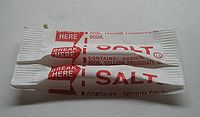
3-gram reduction in daily salt intake would decrease coronary heart disease, stroke, and death

The U.S. diet is high in salt, with the majority coming from processed foods. Reducing dietary salt is a potentially important target for the improvement of public health.

Reducing dietary salt by 3 g per day (1200 mg of sodium per day) is projected to reduce the annual number of new cases of CHD by 60,000 to 120,000, stroke by 32,000 to 66,000, and myocardial infarction by 54,000 to 99,000 and to reduce the annual number of deaths from any cause by 44,000 to 92,000. Such an intervention would be more cost-effective than using medications to lower blood pressure in all persons with hypertension.

The cardiovascular benefits of reduced salt intake are on par with the benefits of population-wide reductions in tobacco use, obesity, and cholesterol levels.

References:

Projected Effect of Dietary Salt Reductions on Future Cardiovascular Disease. NEJM, 2010.
http://content.nejm.org/cgi/content/short/362/7/590
Sweat Bees prefer sweaty people because the human diet is so salty that their perspiration is saturated with that essential nutrient. WSJ, 2012.
Image source: Single-serving salt packets. Wikipedia, GNU Free Documentation License.
7.2% Decrease in Work Hours of U.S. Physicians Between 1996 and 2008

7.2% Decrease in Work Hours of U.S. Physicians Between 1996 and 2008

After remaining stable through the early 1990s, mean hours worked per week decreased by 7.2% between 1996 and 2008 among all physicians (from 55 hours per week in 1996-1998 to 51 hours per week in 2006-2008.

Excluding resident physicians, whose hours decreased by 9.8% due to duty hour limits imposed in 2003, nonresident physician hours decreased by 5.7%.

Physician fees decreased nationwide by 25% between 1995 and 2006, coincident with the decrease in physician hours.

A steady decrease in hours worked per week during the last decade was observed for all physicians, which was temporally and geographically associated with lower physician fees.

References:
Trends in the Work Hours of Physicians in the United States, February 24, 2010, Staiger et al. JAMA 303 (8): 747.

From Happy Hospitalist:

"That means your doctor earns 25% less today than they did just a decade ago. If you went to college and joined a company that said up front you would be paid 25% less in a decade than you were paid on the day you were hired, would you join them?

Why are physicians working fewer hours, a trend unique to doctors? The conclusion was reduced pay. Physicians just don't seem inclined to spend long hours in the office and hospitals to sacrifice their family life for the life of their patients when the the economic reward of doing so just isn't there.

I've talked with many subspecialists at Happy's hospital about the declining payment for their efforts. They all tell me exactly the same thing. They are going to work less and limit their hours as payment reductions come down the pipeline."

Image source: sxc.hu

18% tax on pizza and soda can decrease U.S. adults' weight by 5 pounds (2 kg) per year


Nearly a third of American children are overweight or obese. In our inner cities a prevalence of obesity of more than 50% is not uncommon. Too many calories in, too little energy out.

With two-thirds of Americans either overweight or obese, policymakers are increasingly looking at taxing as a way to address obesity on a population level.

The tobacco experience showed that education is not enough: regulation, litigation, and legislation are needed too. Increasing taxes on cigarettes has been the single most effective strategy in reducing smoking.

An important part of the obesity story is clearly the huge increase in consumption of sugar sweetened beverages (SSBs): carbonated sodas, sweet teas, energy drinks, flavoured water, and sports drinks. Their use has more than doubled in recent years.

"Sadly, we are currently subsidizing the wrong things including the product of corn, which makes the corn syrup in sweetened beverages so inexpensive."

Instead, the agricultural subsidies should be used to make healthful foods such as locally grown vegetables, fruits and whole grains less expensive.

Danish government imposed 25% tax on ice cream, chocolate, sweets, and will increase taxes on soft drinks, tobacco, alcohols to combat obesity, heart disease, and other illnesses. BMJ. http://goo.gl/ixc0

 Some pizzas are 'saltier than the sea' (NHS blog).

References:
Tax soda, pizza to cut obesity, researchers say | Reuters.
Image source: Soft drinks, Wikipedia, public domain.

Correcting Vitamin D Deficiency May Decrease Risk of Heart Disease


Vitamin D is a steroid hormone and a component of a complex endocrine pathway sometimes called 'vitamin D endocrine system' (Medscape, 2012).  In a recent study, 9,400 patients had an average vitamin D level of 19.3 nanograms per milliliter - levels of 30 are generally considered "normal". At their next follow-up visit, 50% of patients had raised their vitamin D levels to above 30 nanograms per milliliter.

Compared with patients whose vitamin D levels were still low, patients who raised their vitamin D levels were 33% less likely to have a heart attack, 20% less likely to develop heart failure, and 30% less likely to die between the two visits (source: WebMD).

"While normal has generally been considered to be 30, some people have suggested 40 or 50 is better. People who increased their vitamin D blood level to 43 nanograms per milliliter had the lowest rates of heart disease and stroke. But increasing it beyond that, say to 60 or 70, offered no greater benefit."

One of the BMJ blogs calls vitamin D "the elixir of life", but it all starts to sound a bit too good to be absolutely true.


Serum 25(OH)D.

The circulating half-life of 25(OH)D is 2 weeks. This is the best test to determine vitamin D status. A 25(OH)D level of less than 32 ng/mL is considered vitamin D insufficient because intestinal calcium absorption is optimized at levels above 32 ng/mL.

A 25(OH)D level of less than 15 or 20 ng/mL have been used to define vitamin D deficiency.

Parathyroid hormone levels start to rise at 25(OH)D levels below 31 ng/mL, which is another marker of vitamin D insufficiency. Although not always required for the diagnosis of vitamin D insufficiency, a serum PTH may be used to help establish the diagnosis of vitamin D insufficiency.

The word vitamin was originally derived from Funk's term "vital amine."

A vitamin D3 dosage of 800 IU/d increased serum 25-(OH)D levels to greater than 50 nmol/L in 97.5% of women http://bit.ly/GzBCcA 

References:
Vitamin D Supplements Lower Heart Disease Risk. WebMD.