
Showing posts with label article. Show all posts
The Diet Factor in Attention-Deficit/Hyperactivity Disorder -
State-of-the-Art Review Article in Pediatrics

The Diet Factor in Attention-Deficit/Hyperactivity Disorder - State-of-the-Art Review Article in Pediatrics

Diets that were tried in attempt to reduce symptoms associated with attention-deficit/hyperactivity disorder (ADHD) include:

- sugar-restricted
- additive/preservative-free
- oligoantigenic/elimination
- fatty acid supplements

Omega−3 supplement is the latest dietary treatment with positive reports of efficacy. Interest in the additive-free diet of the 1970s is occasionally revived.

Provocative reports have drawn attention to the ADHD-associated “Western-style” diet, high in fat and refined sugars, and the ADHD-free “healthy” diet, containing fiber, folate, and omega-3 fatty acids.

Indications for dietary therapy include:

- medication failure
- parental or patient preference
- iron deficiency
- change from an ADHD-linked Western diet to an ADHD-free healthy diet, when appropriate

In practice, additive-free and oligoantigenic/elimination diets are time-consuming and disruptive to the household; they are indicated only in selected patients.

Iron and zinc are supplemented in patients with known deficiencies; they may also enhance the effectiveness of stimulant therapy.

In patients failing to respond or with parents opposed to medication, omega-3 supplements may warrant a trial.

References:

The Diet Factor in Attention-Deficit/Hyperactivity Disorder. J. Gordon Millichap, MD and Michelle M. Yee, CPNP. PEDIATRICS Vol. 129 No. 2 February 1, 2012, pp. 330 -337, (doi: 10.1542/peds.2011-2199)

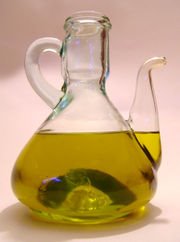
Image source: Olive oil, Wikipedia

The life of a science article: From submission to citation, see a manuscript pass through Nature's editorial process (video)


Source: Nature YouTube channel

Comments from Twitter:

Dean Giustini @giustini: Good one~

Link via the medical blog ScienceRoll.

The Number of Tweets Predicts Future Citations of a Specific Journal Article

Citations of journal articles and the impact factor are widely used measures of scientific impact. Web 2.0 tools such as Twitter, Facebook, blogs and social bookmarking tools provide the possibility to construct article-level or journal-level metrics to gauge impact and influence.

Between 2008 and 2011, all tweets containing links to articles in the Journal of Medical Internet Research (JMIR) were data mined.The tweets were compared to subsequent citation data 17-29 months later.

4,000 tweets cited 280 JMIR articles. The distribution of tweets followed a power law, with most tweets sent on the day when an article was published (44% of all tweets in a 60-day period) or on the following day (16%), followed by a rapid decay.

The Pearson correlations between "tweetations" and regular citations were moderate and statistically significant (0.42 to 0.72).

Highly tweeted articles were 11 times more likely to be highly cited than less-tweeted articles.

Top-cited articles could be predicted from top-tweeted articles with 93% specificity and 75% sensitivity.

Tweets can predict highly cited articles within the first 3 days of article publication.

Social media activity may:

- increase citations
- reflect the underlying qualities of the article

Social impact measures based on tweets are proposed to complement traditional citation metrics. The study author proposed a "twimpact" factor that measures uptake and filters research resonating with the public in real time.

After the initial publication, some science blogs have pointed out potential issues and conflicts of interests in relation to the topic and the single author who is also the founder, owner, and Editor-in-Chief of the journal. You can find more by performing a Google search for "twimpact" factor or checking the references section at the end of this post. Overall, I think this is an interesting concept and Gunther Eysenbach did a great job focusing the attention of the journal publishers on Twitter and Facebook as distribution channels that can also guide in measuring the impact of their articles.

References:

Can Tweets Predict Citations? Metrics of Social Impact Based on Twitter and Correlation with Traditional Metrics of Scientific Impact. Gunther Eysenbach. J Med Internet Res 2011;13(4):e123.

New research plus twitter. Does it make a difference in the clinic. Heidi Allen Digital Strategy in Health.

'Highly Tweeted Articles Were 11 Times More Likely to Be Highly Cited'. The Atlantic.

Twimpact factors: can tweets really predict citations? BMJ.

Tweets, and Our Obsession with Alt Metrics

Image source: Twitter.com.

Comments from Twitter:

@paediatrix:  Interesting. Makes sense

Harris Lygidakis @lygidakis: And Twimpact Factor is a good sign of what's ahead!

12 tips for using Twitter as a learning tool in medical education - PubMed article

The suggested tips are organized into the following categories:

- mechanics of using Twitter
- suggestions and evidence for incorporating Twitter into many medical education contexts
- promoting research into the use of Twitter in medical education

However, you will need paid (or institutional) access to read the actual 12 tips for using Twitter as a learning tool in medical education, published at the Informa website:

http://informahealthcare.com/doi/abs/10.3109/0142159X.2012.746448

References:

Twelve tips for using Twitter as a learning tool in medical education. Forgie SE, Duff JP, Ross S. Med Teach. 2012 Dec 21.
http://www.ncbi.nlm.nih.gov/pubmed/23259608