Showing posts with label every. Show all posts

Dermatology Art Contest by Mayo Clinic shows that art can be seen in every aspect of life

A Mayo Clinic dermatology art contest shows beauty really is skin deep. From Mayo Clinic News blog:

A hair follicle or skin specimen that doesn’t look like much of anything to the naked eye can become a complex, colorful work of art under a microscope. The winner of the Mayo dermatologists’ first art contest in 2011 was “Hair Follicle Triplet”. Alexander Meves, M.D., used fluorescent dyes to highlight proteins. The inaugural winners of the art contest appeared in the May issue of the Journal of Cutaneous Pathology.

“Every single day, dermatopathologists get to see beautiful images under the microscope, and most people never have the opportunity to see that. So I thought it would be a nice way to show not only the science of dermatopathology, but also the art,” says the contest’s creator, Dr. Lehman, a Mayo Clinic dermatopathologist.


Dr. Lehman hopes medical societies will run with the idea and hold similar competitions to highlight aesthetics in their specialties. People in other lines of work can also celebrate the beauty of what they do each day, she says.

Editor's note: Allergists should do something similar. We already highlight beautiful pollen allergens on the monthly covers of the ACAAI journal.

“Art can be seen in every aspect of life,” Dr. Lehman says. “You just have to have an open mind and be looking for it.”

References

Dermatology Art Shows Beauty Really Is Skin Deep. Mayo Clinic News.

Every single hour of television watched after the age of 25 reduces the
viewer’s life expectancy by 22 minutes

Every single hour of television watched after the age of 25 reduces the viewer’s life expectancy by 22 minutes

By comparison, smoking a single cigarette reduces life expectancy by about 11 minutes.

An adult who spends an average of six hours a day watching TV over the course of a lifetime can expect to live 4.8 years fewer than a person who does not watch TV.

References:

Get Up. Get Out. Don't Sit. - NYTimes, 2012 http://nyti.ms/10oXBQd

Comments from Twitter and Google Plus:

Humera Naqvi, MD @nayab78: hmmm that means we ppl should be dying early taking the amount of tv watched but life expectancy has increased.

K Dillon, RDMS,CPC-A @comalliwrites: Confounders & confirmation bias not accounted for...

@ShadolooDoll: Misleading. It isn't TV itself, but the lack of activity. A person who is dedicated to exercise can still watch TV, right?

Timothy Cook: Great, since I stopped watching TV.  I can start smoking again!  ;-)

Davíð Þórisson: Phew - no mention of watching Youtube! :-)

Jimena Yosara Aguilar Jimenez: I'll never watch tv again

Dimiter Stanev: Does that mean that disabled people suffer from this too?

Image source: Wikipedia, Creative Commons Attribution ShareAlike 2.5 License.
Jamie Oliver at TED: Teach every child about food

Jamie Oliver at TED: Teach every child about food


Sharing powerful stories from his anti-obesity project in Huntington, W. Va., TED Prize winner Jamie Oliver makes the case for an all-out assault on our ignorance of food.

Diet: For every 1% increase in omega-3 intake, HDL levels rise by 2.5 mg/dL

HDL levels lower than 40 mg/dL are considered a risk factor for heart disease, while levels of 60 mg/dL or higher are thought to be optimal.

Omega-3 fats, for instance, have been linked to lower risks of age-related vision loss and dementia among older adults.

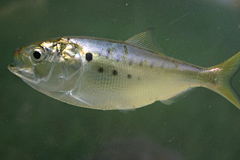
Fish Oil Comes from “The Most Important Fish in the Sea”: Menhaden

Nearly every fish a fish eater likes to eat eats menhaden (shown here). Bluefin tuna, striped bass, redfish and bluefish are just a few of the diners at the menhaden buffet. All of these fish are high in omega-3 fatty acids but are unable themselves to synthesize them. The omega-3s they have come from menhaden.

References:

Diet changes improve older adults' cholesterol too | Reuters.
http://www.reuters.com/article/idUSTRE61I49N20100219
Monounsaturated fats found in vegetable oils, nuts and avocados increase "good" HDL cholesterol levels by 12% http://goo.gl/GBQa5
How We Eat: Analyzing Half a Million Meals - 5 INFOGRAPHICS
Image source: Menhaden B. tyrannus from the Chesapeake Bay. Wikipedia, Brian.gratwicke, Creative Commons Attribution 2.5 License.

Childhood diabetes associated with increasing birth weight - 7% increase in risk for every 1000 g in weight

Childhood onset diabetes is associated with increasing birth weight, equivalent to a 7% increase in risk for every 1000 g in weight.

Caesarean section increases the risk by around 20%.

The risk of childhood onset diabetes increases with maternal age: 5% for each five years of age.

References:
Maternal age and diabetes in childhood. BMJ 2010;340:c623.
Image source: Wikipedia, GNU Free Documentation License.
Sunscreen with high SPF needed at high altitudes: 8-10% increase in sun
exposure for every thousand feet of elevation

Sunscreen with high SPF needed at high altitudes: 8-10% increase in sun exposure for every thousand feet of elevation

Golfers playing in Vail, Colorado, at 2500 meters (roughly 8200 feet) above sea level, got significantly more burn protection from sunscreen with a sun protection factor (SPF) of 70+ compared to one with an SPF of 15.

There is 8-10 percent increase in sun exposure for every thousand feet of elevation. In the summertime, you can get anywhere from 40 percent to 50 percent greater sun intensity than at sea level.

References:
Sunscreen with high SPF needed at high altitudes, Reuters.

Study confirms sunscreen prevents melanoma http://goo.gl/16Vqd

Can You Get Sunburned Through a Car Window? http://goo.gl/M7Fwv - No, but penetrating UVA rays may be related to left-sided skin cancers.

Related:
Melanoma - JAMA Patient Page illustrates the ABCDE of diagnosis, 2011.
Image source: Amazon, for illustration only, not a suggestion to buy any products.
Only 25% of Children Wear Sunscreen Regularly. WebMD, 2012.
People who "drink heavily every so often" are 45% more likely to
develop coronary heart disease

People who "drink heavily every so often" are 45% more likely to develop coronary heart disease

Occasional heavy drinking was defined as having 5 or more standard drinks in a day at least 12 times per year. "Regular" heavy drinkers - those who averaged at least 5 drinks per day, were excluded from the analysis.

In general, moderate drinking - a drink or two per day - is considered a potentially heart-healthy habit. A number of studies have found that moderate drinkers have lower risks of heart disease than teetotalers do.

Research suggests that alcohol can increase "good" HDL cholesterol, has anti-inflammatory effects in the blood vessels and may make the blood less prone to clotting.

On the other hand, regular heavy drinking may increase blood pressure, promote blood clotting and contribute to development of arrhythmias.

References:

Occasional binges may undo alcohol's heart benefits. Reuters, 2010.
Monounsaturated fats found in vegetable oils, nuts and avocados increase "good" HDL cholesterol levels by 12% http://goo.gl/GBQa5
Alcohol literally kills: Gary Moore had 380mg/dL in his blood, Winehouse 416mg/dL when she died surrounded by 3 empty vodka bottles. Telegraph UK, 2012
Image source: OpenClipArt.org, public domain.

The Lancet: Commonest cause of maternal death is post-partum haemorrhage - one woman dies every 7 minutes

99% of all deaths in childbirth are in the least developed countries - 45 million women deliver without a skilled birth attendant every year, a situation in which the greatest number of maternal deaths occur.

The commonest single cause of maternal death is from post-partum haemorrhage, from which one woman dies every 7 minutes.


Health Technologies to Save Mothers. PATH.org video.

References:
Maternal mortality: one death every 7 min. The Lancet, Volume 375, Issue 9728, Pages 1762 - 1763, 22 May 2010.

Doctors are natural communicators - social media is extension of what they do every day

Doctors are natural communicators

My Google+ Circle labeled "Social Media in Medicine" now has 140 members - just one month after Google+ was launched. I think that's great.

Doctors are natural communicators and should do very well on social media platforms. Patients, and society in general, would only benefit from physicians who share ideas and focus on education.

Simple guidance for social media use

The suggested guidance for social media use by health professionals is very simple and based on a recent book by a nurse and social media advocate:

1. Remember the basics:

- your professional focus
- the laws around patient privacy (HIPAA in the U.S.)
- the professional standards of regulatory bodies and of your employers

2. After that, explore all the different social media tools that are out there.

Will Google+ have an effect on blogging? Undoubtedly. Will it "kill" blogging, as some have suggested? Of course not.

The Cycle of Online Information

Google+ is just another communication platform that fits nicely in what I called the "The Circle of Online Information" in 2009.

Here is how to facilitate the Rise of the ePhysican who works hand in hand with the ePatient:


1. Inbox for the web, receive information. Receive updates from selected RSS feeds (Google Reader) and Twitter accounts. See the list of suggested RSS feeds and Twitter accounts at the end of this post.

2. Digital outposts, share information on social networks. Share interesting links and ideas on the 3 main social networks, Twitter/Facebook/Google+, curate the inflow of information.

3. Get feedback. Get feedback from your followers on Twitter/Facebook/Google+, see what works.

4. Publish at your homebase, blog. Write a blog post using the ideas, updates and feedback from Twitter/Facebook/Google+. Expand on them. Aim for a blog post on Monday/Wednesday/Friday.

5. Share your expert opinion. Share the link to your blog post via RSS and the 3 main social networks, Twitter/Facebook/Google+. Go back to step 1 to continue the circle.

Different styles/same goal

The two videos below show different communication styles but both are authored by physicians who use social media as extension of their everyday practice - they educate patients and colleagues and address their questions and concern.

The first video is by an orthopedic surgeon and the second by a pediatrician. They are both gifted natural communicators.


Do your patients speak "Doctor"?


Seattle Mama Doc 101 - Teething and Fever

RSS bundles of medical news

You can use the following RSS bundles to subscribe to medical news items. The bundles are exported from my Google Reader account. They update automatically several times per day. When in Google Reader, just select the ones that you find interesting and share them on Twitter. Add your own comments to some of the tweets.


Top Twitter Doctors

This is a list of the Top Twitter Doctors arranged by specialty in alphabetical order - feel free to add your own suggestions. The list is open to anybody to edit:


Comments from Google+:

Sina Neda - Good to see that the medical community is gathering on Google+, I'm still trying to find interesting people to follow in the medical field. Also want to remind everyone that is interested in MED-networking to add your Google+ and Twitter handles on the following list.

Neil Mehta - I for one would be very sad to see blogs go away. I find them to be the best place for "quiet" reflection, where you can think, write, cite, and then present to the society for feedback - a good example for social constructionism.

Art Gross - Every new social platform is always said to kill blogging. So far none of them have. Blogging is where content is created. Twitter, Google+ is where it is shared. Although the feedback on Google+ adds a new dimension and one that should add value to blogs. BLOGGING IS NOT DEAD YET! :)

Ves Dimov - "Blogging is where content is created. Twitter, Google+ is where it is shared." - Example: "The circle of online information"

Arin Basu - To some extent Google plus is essentially a microblogging/lifestreaming platform. As you wrote, it will change blogging but don't see how blogging will go away.

Related reading

Assessing Patients' Interest in Social Media: 83% used it, 56% wanted providers to use social media http://goo.gl/yD63V
The central part of medicine is patients - don't push them out of social media
Image source: OpenClipArt.org, public domain.