Showing posts with label people. Show all posts
Blogging is good for you - and for most people who read blogs

Blogging is good for you - and for most people who read blogs

From The Economist:

"Academic papers cited by bloggers are far more likely to be downloaded. Blogging economists are regarded more highly than non-bloggers with the same publishing record.

The back-and-forth between bloggers resembles the informal chats, in university hallways and coffee rooms, that have always stimulated economic research, argues Paul Krugman, a Nobel-prize winning economist who blogs at the New York Times. But moving the conversation online means that far more people can take part.

Despite the low barriers to entry, blogs do impose some intellectual standards. Errors of fact or logic are spotted, ridiculed and corrected. Areas of disagreement are highlighted and sometimes even narrowed."

Similar dynamics are in work on many medical blogs authored by physicians.

WIN-WIN, as the author of the blog "The Happy Hospitalist" likes to say.

References:

Economics blogs. A less dismal debate. The Economist, 01/2011.
87% of people older than 50 took one or more drug, according to
Australian survey

87% of people older than 50 took one or more drug, according to Australian survey

A postal survey included a random sample of 4,500 Australians aged ≥ 50 years between in 2009-2010 and the response rate was 37%.

Medications use was very common, 87% of participants took one or more drug (called medicines in Australia) and 43% took five or more in the previous 24 hours.

Complementary medicines were used by 46% of participants.

The most commonly used medications were:

- antihypertensive agents, 43% of participants
- natural marine and animal products including fish oil and glucosamine, 32%
- lipid-lowering agents, 30%

Doctors recommended 79% of all medications and 93% of conventional medications.

Much medicines use was to prevent future disease by influencing risk factors.

In a 2011 study, 4 medication classes were linked to 67% of drug-related hospitalizations:

- warfarin, 33%
- insulins, 14%
- oral antiplatelet agents, 13%
- oral hypoglycemic agents, 11%

High-risk medications were implicated in only 1.2% of hospitalizations.

50% of these hospitalizations were among adults 80 years of age or older. 65% of hospitalizations were due to unintentional overdoses.

Classification of adverse reactions to drugs: "SOAP III" mnemonic (click to enlarge the image):


Adverse drug reactions (ADRs) affect 10–20% of hospitalized patients and 25% of outpatients.

Rule of 10s in ADR:

10% of patients develop ADR
10% of these are due to allergy
10% of these lead to anaphylaxis
10% of these lead to death

References:

A national census of medicines use: a 24-hour snapshot of Australians aged 50 years and older. Tessa K Morgan, Margaret Williamson, Marie Pirotta, Kay Stewart, Stephen P Myers and Joanne Barnes. MJA 2012; 196 (1): 50-53, doi: 10.5694/mja11.10698

4 medication classes linked to 67% of drug-related hospitalizations

Image source: Wikipedia, public domain.
7 healthy traits linked to lower death risk but only 2% of people have
all 7 - are you one of them?

7 healthy traits linked to lower death risk but only 2% of people have all 7 - are you one of them?

People who meet the 7 healthy goals recommended by the American Heart Association are less likely to die of cardiovascular causes.

Here there are:

- not smoking
- moderate exercise at least 5 times a week
- untreated blood pressure under 120/80
- HbA1c under 5.7%
- total cholesterol under 200 mg/dL
- BMI less than 25
- a diet high in produce, fish, and whole grains, and low in sodium and sugary beverages

Less than 2% of people reached all 7 ideals.

Those who met 6-7 goals had reduced risks for all-cause mortality (hazard ratio, 0.49), compared with participants meeting zero or one goal.

References:

Healthy Habits Associated with Reduced Mortality Risk - Physician's First Watch http://bit.ly/N9x8ha
Trends in Cardiovascular Health Metrics and Associations With All-Cause and CVD Mortality Among US Adults - JAMA http://bit.ly/N9xzYO
Image source: OpenClipart.org, public domain.

People Treat Computers and New Media as Real People and Places

A few excerpts from the articles linked below:

Study: multitaskers are terrible at every aspect of multitasking. Multitasking may be creating people who are unable to think well and clearly.

People relate to technological devices socially (as if they are people), and those interactions affect others. Technology and people: Do we have to bring back the saying ‘Look at me when I talk to you’?

Japanese nurse robot - ACTROID-F (video):


References:

Clifford Nass, Who Warned of a Data Deluge, Dies at 55 - NYTimes.com http://nyti.ms/16VGF7m

College admission officers: They Loved Your G.P.A. Then They Saw Your Tweets. 30% college admissions officers said discovered information online that negatively affected an applicant’s prospects http://buff.ly/1dYeTt4

Real doctors, real people: from beekeeper to "tough mudder"

Dr. Jonathan Kirsch, a hospitalist at UNC Health Care, is also a beekeeper. He enjoys both the honey and the benefit of pollinated fruit trees and hand-picked fruit.


A team from the UNC Bone Marrow and Stem Cell Transplant Program headed up by Tippu Khan, PharmD, BCOP and Nicole Frazier, RN, BSN participated in an epic journey which included leaping over fire, trekking through waste-high mud, tossing spears, dodging attacks and most of all braving near freezing temperatures in the driving rain. What is all this about? It's the Spartan Race, an event of pure primitive craziness that promises it's participants an experience they'll never forget.


Related:

real doctors, real people - Oliver Smithies - YouTube http://buff.ly/1l8Vcor
People on statins are 9% more likely to develop diabetes according to a
meta-analysis

People on statins are 9% more likely to develop diabetes according to a meta-analysis

From Reuters:

This small risk is outweighed by the drugs' heart-protecting properties but it could prompt a rethink among those with low cardiovascular risk factors who are tempted to take statins to prevent future heart disease.

"It will stop us putting statins in the water, as it were, and mean we give them when appropriate for the right reasons."

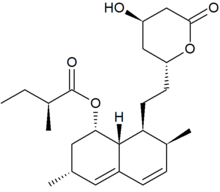
Lovastatin, a compound isolated from Aspergillus terreus, was the first statin to be marketed for lowering cholesterol. Image source: Wikipedia, public domain.

Statins are among the most successful drugs of all time and have been credited with preventing millions of heart attacks and strokes.

This Lancet meta-analysis included 13 large randomised controlled trials involving more than 91,000 patients.

Treating 255 patients with statins for 4 years would result in only one extra case of diabetes.

Giving statins to the same group would avoid 5.4 deaths or heart attacks over 4 years, and nearly the same number of strokes.

Clinical practice in patients with moderate or high cardiovascular risk or existing cardiovascular disease should not change.

References:
http://www.thelancet.com/journals/lancet/article/PIIS0140-6736(09)61965-6/fulltext

http://www.reuters.com/article/idUSTRE61G00P20100217

Related:
Statins Don't Cause Diabetes. Dr. Mintz' Blog.
Cheap fast food "enticing people to eat more because they think they're
saving money when they're really buying heart disease"

Cheap fast food "enticing people to eat more because they think they're saving money when they're really buying heart disease"


"Fake foods are more affordable. It's enticing people to eat more because they think they're saving money when they're really just buying heart disease."

References:
10 Questions for Jillian Michaels. TIME, 2010.
People who "drink heavily every so often" are 45% more likely to
develop coronary heart disease

People who "drink heavily every so often" are 45% more likely to develop coronary heart disease

Occasional heavy drinking was defined as having 5 or more standard drinks in a day at least 12 times per year. "Regular" heavy drinkers - those who averaged at least 5 drinks per day, were excluded from the analysis.

In general, moderate drinking - a drink or two per day - is considered a potentially heart-healthy habit. A number of studies have found that moderate drinkers have lower risks of heart disease than teetotalers do.

Research suggests that alcohol can increase "good" HDL cholesterol, has anti-inflammatory effects in the blood vessels and may make the blood less prone to clotting.

On the other hand, regular heavy drinking may increase blood pressure, promote blood clotting and contribute to development of arrhythmias.

References:

Occasional binges may undo alcohol's heart benefits. Reuters, 2010.
Monounsaturated fats found in vegetable oils, nuts and avocados increase "good" HDL cholesterol levels by 12% http://goo.gl/GBQa5
Alcohol literally kills: Gary Moore had 380mg/dL in his blood, Winehouse 416mg/dL when she died surrounded by 3 empty vodka bottles. Telegraph UK, 2012. 
Image source: OpenClipArt.org, public domain.