Showing posts with label NYTimes. Show all posts

Analysis of Rafael Nadal's Knee Injury - Computer Animation from NYTimes

Rafael Nadal missed seven months last year with a knee injury. Nadal, an 11-time Grand Slam champion, returned to the tour at a small clay-court event in Vina del Mar, Chile, in February after recovering from a partially torn patella tendon and inflammation in his left knee. That knee will face its toughest test when he plays in the French Open, his first Grand Slam event since his return.


The 26-year-old Spaniard is favored to win and become the only player with eight French Open titles, even though he said his knee is still “not 100 percent.” Although he can practice less than an hour a day, he’s made the final in each of the eight tournaments he’s played since he returned to the men’s tennis circuit in February.

References:

Even at Half Speed, Nadal Still the Man to Beat in Paris - Bloomberg http://bloom.bg/111VzBK
Italian Hand Gestures - a Short History in a NYTimes Video

Can Italians talk without using their hands? Gestures offer a window into Roman culture. Read the story here: http://nyti.ms/1avwKYQ


Some gestures are simple but others are far more complex. They add an inflection — of fatalism, resignation, world-weariness — that is as much a part of the Italian experience as breathing.

To Italians, gesturing comes naturally. Some even joke that gesturing may even begin before birth.

Isabella Poggi, a professor of psychology at Roma Tre University and an expert on gestures, has identified around 250 gestures that Italians use in everyday conversation.

References:

When Italians Chat, Hands and Fingers Do the Talking - NYTimes.com, 2013 http://nyti.ms/18x8ntc

Notes on Blindness - NYTimes video

John developed cataracts at the age of 13, which left him blind for months at a time. The restoration of his sight was followed by a series of retinal detachments. After a number of operations, in 1980, at age 45, John’s vision was so poor that he was registered blind. After 3 years, he could no longer remember what his child looked like...

He kept a diary on audio-cassette of his interior world of blindness. This film is a dramatization that uses his original recordings. They document a purging period of grief, but eventually of renewal, in what John describes as the discovery of a “world beyond sight.”

Read the full story at the NYTimes website: http://nyti.ms/1asqK2r

Punched Out: The Rise and Fall of NHL Enforcer Derek Boogaard (NYTimes video)

Derek Boogaard was one of the N.H.L.'s most feared fighters before overdosing in 2011. The New York Times examined the life and death of the professional hockey player Derek Boogaard, who rose to fame as one of the sport's most feared fighters before dying at age 28 on May 13. The 36-minute video is from 2014:


A native of Saskatchewan, he was known primarily as a fighter and enforcer throughout his career, from junior hockey to the pros. His fighting prowess made him a favorite with fans. In 2007 he was voted as the second most intimidating player in the NHL, behind Georges Laraque, who attributed his retirement in part to a desire to avoid the serious injury Boogaard could inflict, such as the cheekbone fracture Todd Fedoruk suffered that had to be repaired with metal plates.

He died at 28 from an accidental drug and alcohol overdose while recovering from a concussion. A posthumous examination of his brain found he had suffered from chronic traumatic encephalopathy more advanced than that seen in some former enforcers who had died in middle age. That disclosure came shortly after the deaths of two other hockey enforcers, both of whom were also under 40 and had similar health issues. The three deaths triggered a debate in the hockey community about the issues faced by enforcers and their place in the game. His parents have filed lawsuits against the NHL and its players' union over his death.

Read the NYTimes story here: http://nyti.ms/1iZZ9VQ

References:

Punched Out: The Rise and Fall of Derek Boogaard [Full Version] | The New York Times - YouTube http://buff.ly/1jIEvPi

Derek Boogaard - Wikipedia http://buff.ly/1jIGF1h

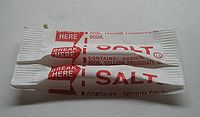
A NYTimes skeptic doubts that decreasing salt intake would have any benefits (it may even hurt)


From the NYtimes:

"The harder the experts try to save Americans, the fatter we get. Officials responded by advising Americans to shun fat, which became the official villain of the national dietary guidelines during the 1980s and 1990s. The anti-fat campaign definitely made an impact on the marketing of food, but as we gobbled up all the new low-fat products, we kept getting fatter. Eventually, in 2000, the experts revised the dietary guidelines and conceded that their anti-fat advice may have contributed to diabetes and obesity by unintentionally encouraging Americans to eat more calories.

“When you reduce salt, you reduce blood pressure, but there can also be other adverse and unintended consequences. As more data have accumulated, it’s less and less supportive of the case for salt reduction, but the advocates seem more determined than ever to change policy.”

References:

Findings - When It Comes to Salt, No Rights or Wrongs. Yet. - NYTimes.com.
3-gram reduction in daily salt intake would decrease coronary heart disease, stroke, and death
Sweat Bees prefer sweaty people because the human diet is so salty that their perspiration is saturated with that essential nutrient. WSJ, 2012.
Image source: Single-serving salt packets. Wikipedia, GNU Free Documentation License.