

Showing posts with label Lancet. Show all posts
"Family practitioners in the US are facing extinction. In their place
must come nurse-practitioners" - The Lancet

"Family practitioners in the US are facing extinction. In their place must come nurse-practitioners" - The Lancet

From the Lancet review of the University of Pennsylvania nursing school:

Family practitioners in the US are facing extinction. In their place must come nurse-practitioners. Nurses are better educated to navigate and refer patients to specialists. They don't have any illusions about managing complex illness. Their lower threshold for referral means less risk of missing diagnoses or delaying expert care.

This is one vision for nursing to be found at the University of Pennsylvania's extraordinary School of Nursing.


I'm not sure if this is the best model for primary care in the U.S. What do you think?

References:

Offline: Nursing, but not as you know it. The Lancet, Volume 378, Issue 9805, Page 1768, 19 November 2011.
Image source: OpenClipArt.org, public domain.

Comments from Twitter:

@scanman: Looks like doctors will be an endangered genus in the US within this century

@MGastorf: so disagree. I know that is being pushed but I can provide far more complete care than nurse practitioner.

@davisliumd: Umm, No -> RT @DrVes Family practitioners in the US are facing extinction. In their place must come nurse-practitioners

@davisliumd: Agree -> RT @drves: @davisliumd that was actually a quote from The Lancet, not my opinion: j.mp/w33Kvq.
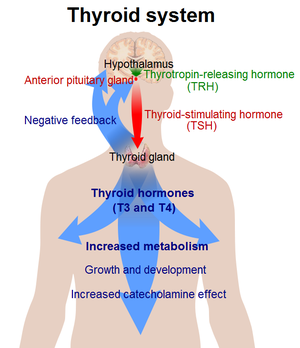
Thyrotoxicosis - Lancet 2012 review

Thyrotoxicosis is a common disorder, especially in women. Thyroid disease affects 7 times more women than men.

Etiology

There are 3 main causes of thyrotoxicosis: Graves' disease, toxic nodular hyperthyroidism, and thyroiditis.

Here are some more details about them:

- Graves' disease (autoimmune hyperthyroidism) is the most frequent cause of thyrotoxicosis
- toxic nodular hyperthyroidism, due to the presence of one or more autonomously functioning thyroid nodules
- thyroiditis caused by inflammation, which results in release of stored hormones

Treatment

The available treatments for thyrotoxicosis have been unchanged for 60 years.

Antithyroid drugs are the usual initial treatment. Thionamides such as carbimazole or its active metabolite methimazole are the drugs of choice.

A prolonged course leads to remission of Graves' hyperthyroidism in only 30% of cases.

Because of this low remission rate in Graves' disease (only 30%) and the inability to cure toxic nodular hyperthyroidism with antithyroid drugs alone, radioiodine is increasingly used as first line therapy. It is the preferred choice for relapsed Graves' hyperthyroidism.

Surgery with total thyroidectomy is an option in selected cases. .

References:

Thyrotoxicosis. The Lancet, Volume 379, Issue 9821, Pages 1155 - 1166, 24 March 2012.

Thyroid disease—more research needed. The Lancet, Volume 379, Issue 9821, Page 1076, 24 March 2012.

Image source: Wikipedia, public domain.

Chronic insomnia - Lancet 2012 review

Insomnia is a common condition that can present independently or comorbidly with another medical or psychiatric disorder.

Treatment of chronic insomnia

Benzodiazepine-receptor agonists (BzRAs) and cognitive-behavioural therapy (CBT) are supported by the best empirical evidence.

Benzodiazepine-receptor agonists (BzRAs) are effective in the short-term management of insomnia, but evidence of long-term efficacy is scarce. Also, most hypnotic drugs are associated with potential adverse effects.

Cognitive-behavioural therapy (CBT) is an effective alternative for chronic insomnia.

CBT is more time consuming than drug management but it produces sleep improvements that are sustained over time.

However, CBT is not readily available in most clinical settings. Access and delivery can be made easier through:

- telephone consultations
- group therapy
- self-help approaches

How to succeed? Get more sleep


In this 4-minute talk, Arianna Huffington (founder of The Huffington Post) shares a small idea that can awaken much bigger ones: the power of a good night's sleep. Instead of bragging about our sleep deficits, she urges us to sleep our way to increased productivity and happiness -- and smarter decision-making.

References:

Chronic insomnia. The Lancet, Volume 379, Issue 9821, Pages 1129 - 1141, 24 March 2012.
Image source: A halo around the Moon. Wikipedia, GNU Free Documentation License.
Myopia - 2012 Lancet review

Myopia - 2012 Lancet review

From the Lancet:

Myopia (nearsightedness) has emerged as a major health issue in east Asia, because of:

- increasingly high prevalence in the past few decades. It now affacts 80-90% in school-leavers.
- sight-threatening pathologies associated with high myopia, which now affect 10-20% of those completing secondary schooling in east Asia.

Similar, but less marked, changes are occurring in other parts of the world.

The higher prevalence of myopia in east Asian cities seems to be associated with increasing educational pressures, combined with life-style changes, which have reduced the time children spend outside.

There are no reported major genes for school myopia, although there are several genes associated with high myopia. Any genetic contribution to ethnic differences may be small.

There are some optical and pharmacological interventions that seem promising for preventing the development of myopia or slowing its progression, but the evidence is still preliminary.

References:

Myopia. Prof Ian G Morgan PhD a b , Prof Kyoko Ohno-Matsui MD c, Prof Seang-Mei Saw PhD. The Lancet, Volume 379, Issue 9827, Pages 1739 - 1748, 5 May 2012.
Nearsighted kids may get worse in winter http://trib.in/VcvmC1 -- Myopia progression seem to decrease in periods with longer days and to increase in periods with shorter days. Children should be encouraged to spend more time outside during daytime to prevent myopia (study) http://buff.ly/X1cFSm
Image source: OpenClipArt.org

Age-related macular degeneration - 2012 Lancet review

From the The Lancet:

Age-related macular degeneration is a major cause of blindness worldwide. With ageing populations in many countries, more than 20% might have the disorder.

Advanced age-related macular degeneration is associated with progressive visual impairment. It includes two subtypes:

- neovascular age-related macular degeneration (wet)
- geographic atrophy (late dry) macular degeneration

What are the risk factors for macular degeneration?

Major risk factors include:

- cigarette smoking
- nutritional factors
- cardiovascular diseases
- genetic markers, including genes regulating complement, lipid, angiogenic, and extracellular matrix pathways

How to diagnose macular degeneration?

Accurate diagnosis combines clinical examination and investigations including:

- retinal photography
- angiography
- optical coherence tomography

What is the treatment for macular degeneration?

Dietary anti-oxidant supplementation slows progression of the disease.

Treatment for neovascular age-related (wet) macular degeneration includes intraocular injections of anti-VEGF agents. The two commonly used anti-VEGF therapies, ranibizumab and bevacizumab, have similar efficacy.

Future treatments include inhibition of other angiogenic factors, and regenerative and topical therapies.

References:

Age-related macular degeneration. The Lancet, Volume 379, Issue 9827, Pages 1728 - 1738, 5 May 2012.
Image source: Wikimedia Commons.
Autoimmune hepatitis - 2013 Lancet review

Autoimmune hepatitis - 2013 Lancet review

In common with many autoimmune diseases, autoimmune hepatitis is associated with non-organ-specific antibodies in the context of hepatic autoimmunity.

Autoimmune hepatitis can present in acute or chronic forms.

Remission is achievable in up to 85% of cases. For the remaining patients, immunosuppression is an option.

Liver transplantation provides an excellent outcome for patients with acute liver failure or complications of end-stage liver disease, including hepatocellular carcinoma.

References:

Autoimmune hepatitis: The Lancet http://bit.ly/1aApnxp

Male hypogonadism - 2014 Lancet review

Clinical presentations vary dependent on:

- time of onset of androgen deficiency
- whether the defect is in testosterone production or spermatogenesis
- associated genetic factors
- history of androgen therapy

Diagnosis of hypogonadism is made on the basis of:

- signs and symptoms consistent with androgen deficiency
- low morning testosterone concentrations in serum on multiple occasions

Several testosterone-replacement therapies are approved.

Contraindications to testosterone-replacement therapy include:

- prostate and breast cancers
- uncontrolled congestive heart failure
- severe lower-urinary-tract symptoms
- erythrocytosis

References:

Male hypogonadism - The Lancet http://bit.ly/1eh9f3R
Image source: The shield and spear of the Roman god Mars, which is also the alchemical symbol for iron, represents the male sex. Wikipedia, public domain.

Sarcoidosis - 2014 Lancet review

Sarcoidosis is a systemic disease of unknown cause that is characterised by the formation of immune granulomas in various organs, mainly the lungs and the lymphatic system.

Sarcoidosis might be the result of an exaggerated granulomatous reaction after exposure to unidentified antigens in individuals who are genetically susceptible.

Diagnosis is made by symptoms, PFTs, CXR, CT, endobronchial ultrasound and PET for assessment of inflammatory activity.

Recognition of unexplained persistent disabling symptoms, fatigue, small-fibre neurological impairment, cognitive failure, and changes to health state and quality of life, has improved.

Mortality in patients with sarcoidosis is higher than that of the general population, mainly due to pulmonary fibrosis.

References:

Sarcoidosis - The Lancet http://bit.ly/1eh9I5S
Image source: Lungs, Wikipedia, public domain.

Related: