Showing posts with label increased. Show all posts

Symptomatic knee osteoarthritis (OA) increased during the past 20 years but radiographic OA did not

A recent surge in knee replacements is assumed to be due to aging and increased obesity of the U.S. population.

This cross-sectional study used data from 6 NHANES (National Health and Nutrition Examination Survey) surveys between 1971 and 2004 and from 3 examination periods in the FOA (Framingham Osteoarthritis) Study between 1983 through 2005 of the U.S. population.

Prevalence of knee pain increased by 65% in NHANES from 1974 to 1994.

In the FOA Study, prevalence of knee pain and symptomatic knee osteoarthritis doubled in women and tripled in men over 20 years.

However, no such trend was observed in the prevalence of radiographic knee osteoarthritis.

Prevalence of knee pain has increased substantially over 20 years. Obesity accounted for only part of this increase.

Symptomatic knee osteoarthritis increased but radiographic knee osteoarthritis did not. Why the patients are more symptomatic now than 20 years ago?

Research Finds Exercise is Good for Arthritis (a Cleveland Clinic video):


What is Boomeritis?

In 2006, the NYTimes described the health problems of aging baby boomers who continue to exercise: osteoarthritis which needs "knee and hip replacements, surgery for cartilage and ligament damage, and treatment for tendinitis, arthritis, bursitis and stress fractures." Some doctors call this phenomenon "boomeritis" or "Generation Ouch."

References:

Increasing Prevalence of Knee Pain and Symptomatic Knee Osteoarthritis: Survey and Cohort Data. ANN INTERN MED, December 6, 2011, vol. 155 no. 11 725-732.

What is Boomeritis?

Image source: OpenClipart.org, public domain.

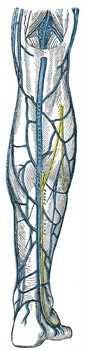
Superficial Venous Thrombosis Linked to Increased Risk of "Deep" Venous
Thromboembolism for Months

Superficial Venous Thrombosis Linked to Increased Risk of "Deep" Venous Thromboembolism for Months

Superficial venous thrombosis (SVT) is perceived to have a benign prognosis.

Among 844 patients with SVT, 24.9% also had deep venous thrombosis (DVT) or symptomatic pulmonary embolism.

Among 600 patients without DVT or pulmonary embolism at inclusion who were eligible for 3-month follow-up, 10.2% developed thromboembolic complications at 3 months despite 90.5% having received anticoagulants:

- pulmonary embolism 0.5%
- DVT 2.8%
- extension of SVT 3.3%
- recurrence of SVT 1.9%

A substantial number of patients with SVT exhibit venous thromboembolism at presentation, and some that do not can develop this complication in the subsequent 3 months.

References:
http://www.annals.org/content/152/4/218.short
Image source: Saphenous vein, Gray's Anatomy, 1918 (public domain).
Using the Internet for health purposes was associated with increased
depression

Using the Internet for health purposes was associated with increased depression

The rapid expansion of the Internet has increased the ease with which the public can obtain medical information. Most research on the utility of the Internet for health purposes has evaluated the quality of the information or examined its impact on clinical populations. Little is known about the consequences of its use by the general population.

Health-related Internet use was associated with small but reliable increases in depression (i.e., increasing use of the Internet for health purposes from 3 to 5 days per week to once a day was associated with 0.11 standard deviations more symptoms of depression, P = 0.002).

Using the Internet for health purposes was associated with increased depression. The increase may be due to increased rumination, unnecessary alarm, or over-attention to health problems.

In contrast, using the Internet to communicate with friends and family was associated with declines in depression.

References:
Negative consequences from the use of internet for health information - CDC (PDF) http://goo.gl/Fgcq via http://goo.gl/947F
Image source: Wikipedia, public domain.

Updated: 08/12/2010
Reduced workload and increased participation of attendings associated
with higher satisfaction of doctors in training

Reduced workload and increased participation of attendings associated with higher satisfaction of doctors in training

An experimental inpatient-medicine service was designed with reduced resident workload comprising two teams, with each team consisting of two attending physicians, two residents, and three interns.

Attending physicians, selected for their "teaching prowess", supervised the teams throughout the workday and during bedside team-teaching rounds.

This experimental model was compared with a control model comprising two teams, with each consisting of one resident and two interns, plus multiple supervising attending physicians who volunteered to participate.

Over a 12-month period, 1892 patients were assigned to the experimental teams and 2096 to the control teams; the average census per intern was 3.5 and 6.6 patients, respectively.

Overall satisfaction was significantly higher among trainees on the experimental teams than among those on the control teams (78% and 55%, respectively; P=0.002).

Interns on the experimental teams spent more time in learning and teaching activities than did interns on the control teams (learning: 20% of total time vs. 10%, P=0.01; teaching: 8% of total time vs. 2%, P=0.006).

A model with two attending physicians and limited patient-staff census resulted in greater satisfaction on the part of trainees and attending physicians than the standard approach.

Reduced trainee workload and increased participation of attending physicians was associated with higher trainee satisfaction and increased time for educational activities.

Image source: OpenClipArt.org, public domain.

People who get less than 6 hours sleep per night have an increased risk of dying prematurely

People who get less than 6 hours sleep per night had an increased risk of dying prematurely in a recent study. Those who slept for less than that amount of time were 12% more likely to die early, though researchers also found a link between sleeping more than 9 hours and premature death.

The study aggregated decade-long studies from around the world involving more than 1.3 million people and found "unequivocal evidence of the direct link" between lack of sleep and premature death.

Just one sleepless night can hamper the body's ability to use insulin to process sugar in the bloodstream. Insulin sensitivity is not fixed in healthy people, but depends on the duration of sleep in the preceding night.

"Society pushes us to sleep less and less," one of the study investigators said, adding that about 20% of the population in the United States and Britain sleeps less than 5 hours.

Adults typically need between 7 and 9 hours sleep a night. If you sleep little, you can develop diabetes, obesity, hypertension and high cholesterol.

Image source: A halo around the Moon. Wikipedia, GNU Free Documentation License.

Short telomeres lead to chromosomal instability and increased cancer risk and mortality

Telomeres are essential to preserve the integrity of the genome. Critically short telomeres lead to replicative cell senescence and chromosomal instability and may thereby increase cancer risk.

Leukocyte telomere length was measured by quantitative polymerase chain reaction in 787 participants free of cancer at baseline in 1995 from a prospective, population-based study in Italy. The follow-up period was 10 years.

Human chromosomes (grey) capped by telomeres (white). Image source: Wikipedia, public domain.

11.7% of participants developed cancer (incidence rate, 13.3 per 1000 person-years).

Short telomere length at baseline was associated with incident cancer independently of cancer risk factors (hazard ratio [HR] 1.60).

Compared with participants in the longest telomere length group, the HR for incident cancer was 2.15 in the middle length group and 3.11 in the shortest length group. Furthermore, short telomere length was associated with cancer mortality and individual cancer subtypes with a high fatality rate.

There is an inverse relationship between telomere length and both cancer incidence and mortality.

References:
Telomere Length and Risk of Incident Cancer and Cancer Mortality. Peter Willeit, MD; Johann Willeit, MD; Agnes Mayr, MD; Siegfried Weger, MD; Friedrich Oberhollenzer, MD; Anita Brandstätter, PhD; Florian Kronenberg, MD; Stefan Kiechl, MD. JAMA. 2010;304(1):69-75.

People who brush their teeth less than twice a day have a 70% increased risk of heart disease

A Scottish national population based survey examined if self reported toothbrushing behaviour is associated with cardiovascular disease and markers of inflammation (C reactive protein) and coagulation (fibrinogen).

Participants were 12,000 men and women, mean age 50. Oral hygiene was assessed from self reported frequency of toothbrushing. There were a total of 555 cardiovascular disease events over an average of 8 years of follow-up, of which 170 were fatal.

Participants who reported poor oral hygiene (never/rarely brushed their teeth) had an increased risk of a cardiovascular disease event (hazard ratio 1.7).

They also had increased concentrations of both C reactive protein and fibrinogen.

Poor oral hygiene is associated with higher levels of risk of cardiovascular disease and low grade inflammation, though the causal nature of the association is yet to be determined.

References:
Toothbrushing, inflammation, and risk of cardiovascular disease: results from Scottish Health Survey. BMJ 2010;340:c2451.
Image source: Cross-section of a tooth with visible gums, or gingiva, Wikipedia, GNU Free Documentation License.
Oropharyngeal carcinoma increased by 22% in 6 years, related to rise in
HPV

Oropharyngeal carcinoma increased by 22% in 6 years, related to rise in HPV

Head and neck cancer is the sixth most common cancer. Despite an overall marginal decline in the incidence of most head and neck cancers in recent years, the incidence of oropharyngeal squamous cell carcinoma has increased greatly, especially in the developed world.

In the United States, the incidence of oropharyngeal squamous cell carcinoma increased by 22% between 1999 and 2006.

The increase in incidence of oropharyngeal squamous cell carcinoma seems to be accounted for by a rise in human papillomavirus (HPV) related oropharyngeal carcinoma.

References:

Oropharyngeal carcinoma related to human papillomavirus. BMJ 2010; 340:c1439 doi: 10.1136/bmj.c1439 (Published 25 March 2010).
Image source: HPV types and associated diseases, Wikipedia, public domain.

Twitter comments:

@travispew (Travis Pew): So get your kids the HPV shot.